New Study Reveals Moon's Largest Impact Basin Formed by 'Decapitated' Asteroid
Summary: High-resolution 3D simulations by researchers at Purdue University show that the Moon's largest impact basin, the South Pole-Aitken (SPA), was formed by a differentiated asteroid approximately 260 kilometers in diameter striking at a shallow 30-degree angle, shearing off its outer layers and driving its dense iron core into the lunar surface.
Sources (original pages)
- A bizarre 'decapitated' asteroid likely made the moon's largest impact crater (space.com, May 7, 2026)
Background
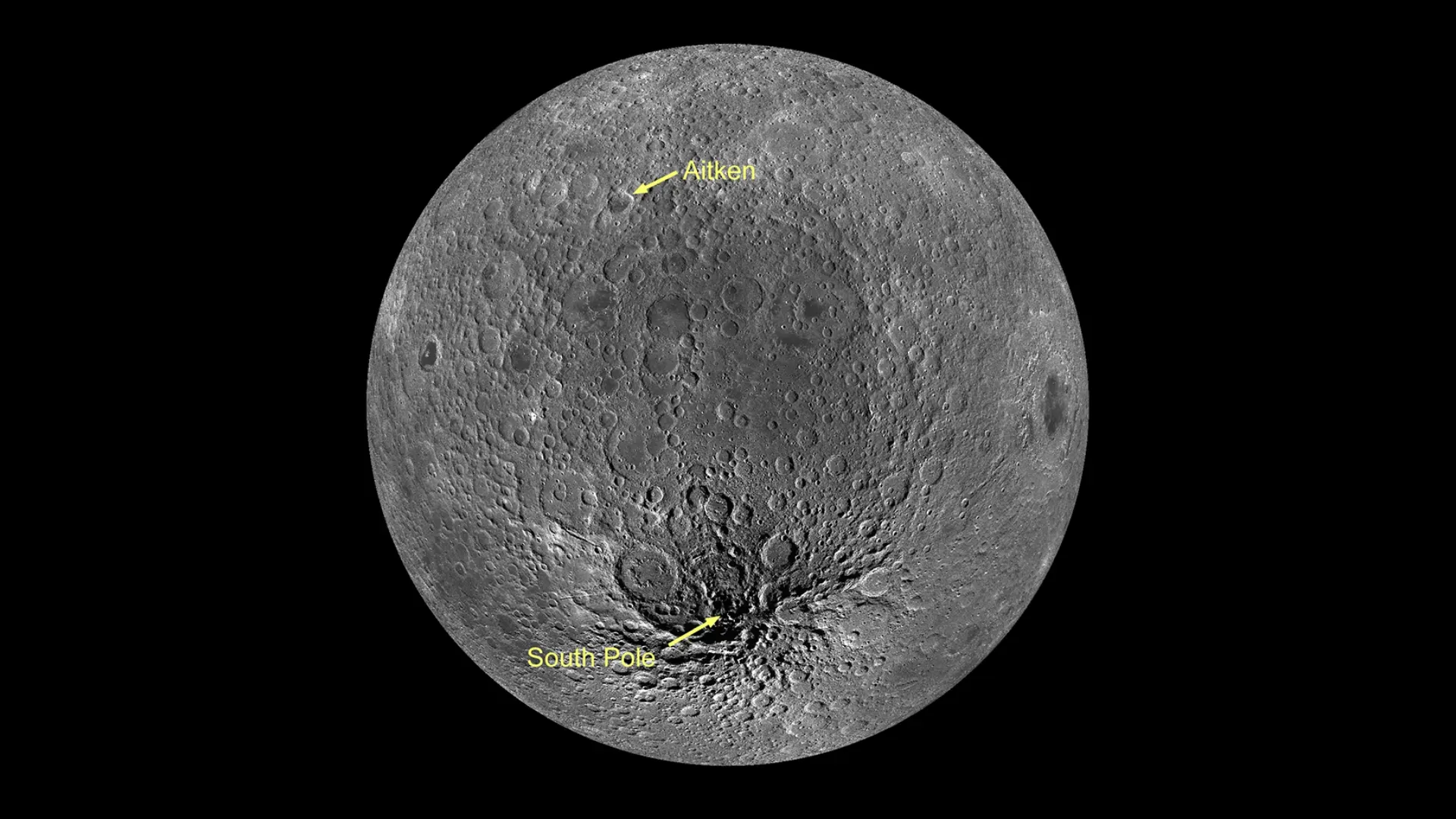
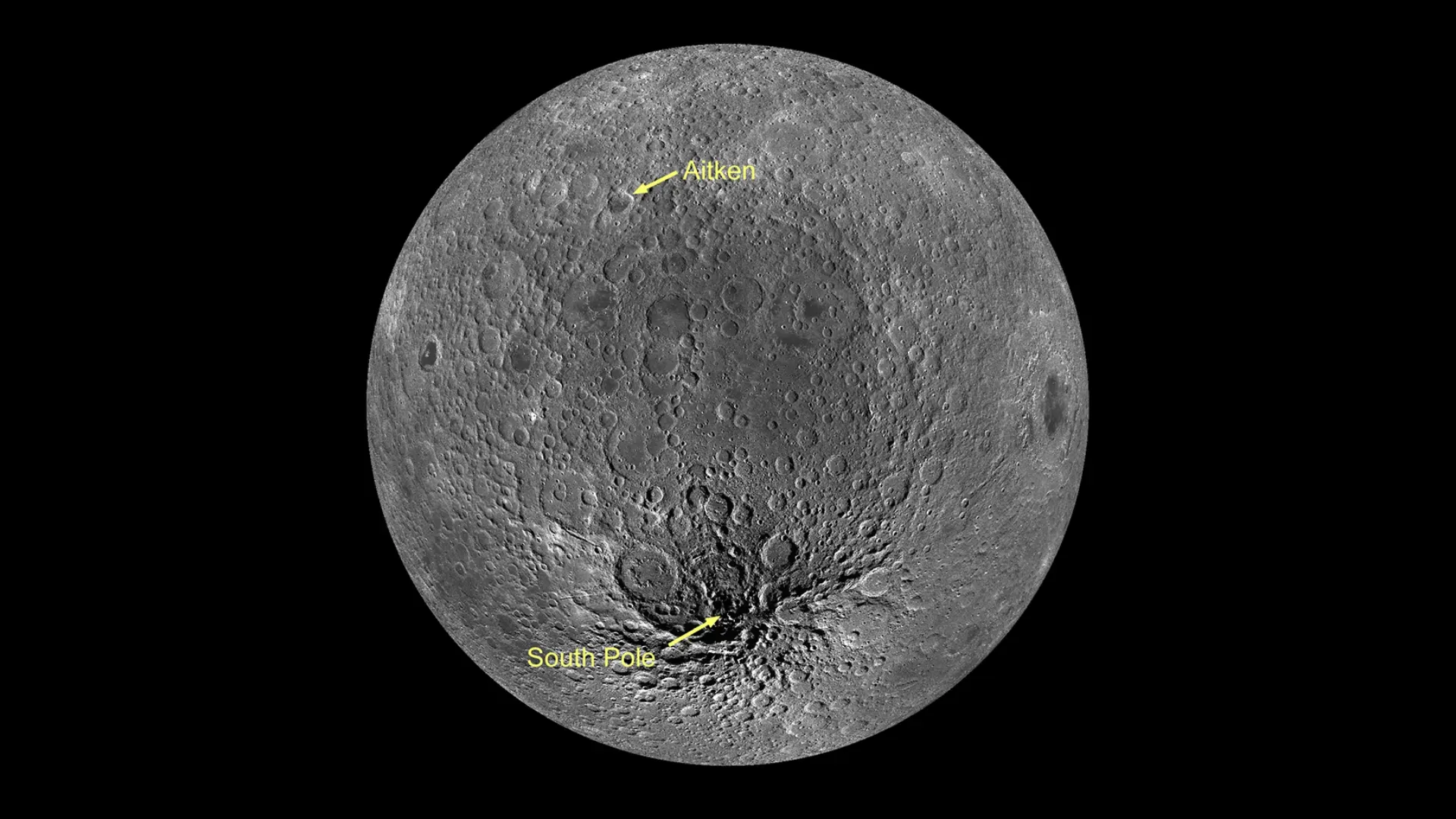
The South Pole-Aitken (SPA) basin is the Moon's largest known impact structure, spanning over 2,000 kilometers across the lunar far side, stretching from Aitken crater to the lunar south pole. The basin is scientifically significant because the impact may have excavated material from deep within the lunar mantle, providing a unique window into the Moon's interior.
Scientists have long debated exactly how the SPA basin formed—including the size, speed, direction, and compositional properties of the impactor.
Key Findings
A team of researchers led by Shigeru Wakita of Purdue University, using high-resolution 3D simulations, found that:
- The impactor was a differentiated asteroid: A large asteroid that had already separated into a dense iron core and a rocky outer layer, much like a tiny planet
- Approximately 260 kilometers in diameter: A giant near-Earth asteroid size
- Struck at a shallow 30-degree angle from north to south: At a velocity of about 13 kilometers per second
- The "decapitation" effect: At such a shallow trajectory, the impactor's upper layers sheared off while the dense iron core continued plowing forward, creating the SPA basin's distinctive tapered elliptical shape
As the authors wrote: "The impactor's core is responsible for the tapered shape of SPA." By contrast, a simpler, undifferentiated asteroid would have produced a rounder basin.
Scientific Significance
The study resolves a long-standing debate about the SPA basin's formation—confirming that the impactor was a differentiated asteroid rather than a homogeneous rock. More importantly, the impact would have flung ejecta from the lunar mantle to the basin's edges, near the lunar south pole—the very region where NASA plans to land Artemis astronauts. Future astronauts may be able to directly sample these materials from the Moon's deep interior, providing direct evidence for studying the Moon's internal composition and early evolution.