
Artemis 2 Crew Witnesses Impact Flashes on the Far Side of the Moon
Summary: During their April 6 flyby of the lunar far side, the four Artemis 2 astronauts observed several meteoroid impact flashes on the Moon's surface with the unaided eye — the first direct human observations of such phenomena in cislunar space. NASA scientists say trained crew observers offer advantages that cameras cannot replicate.
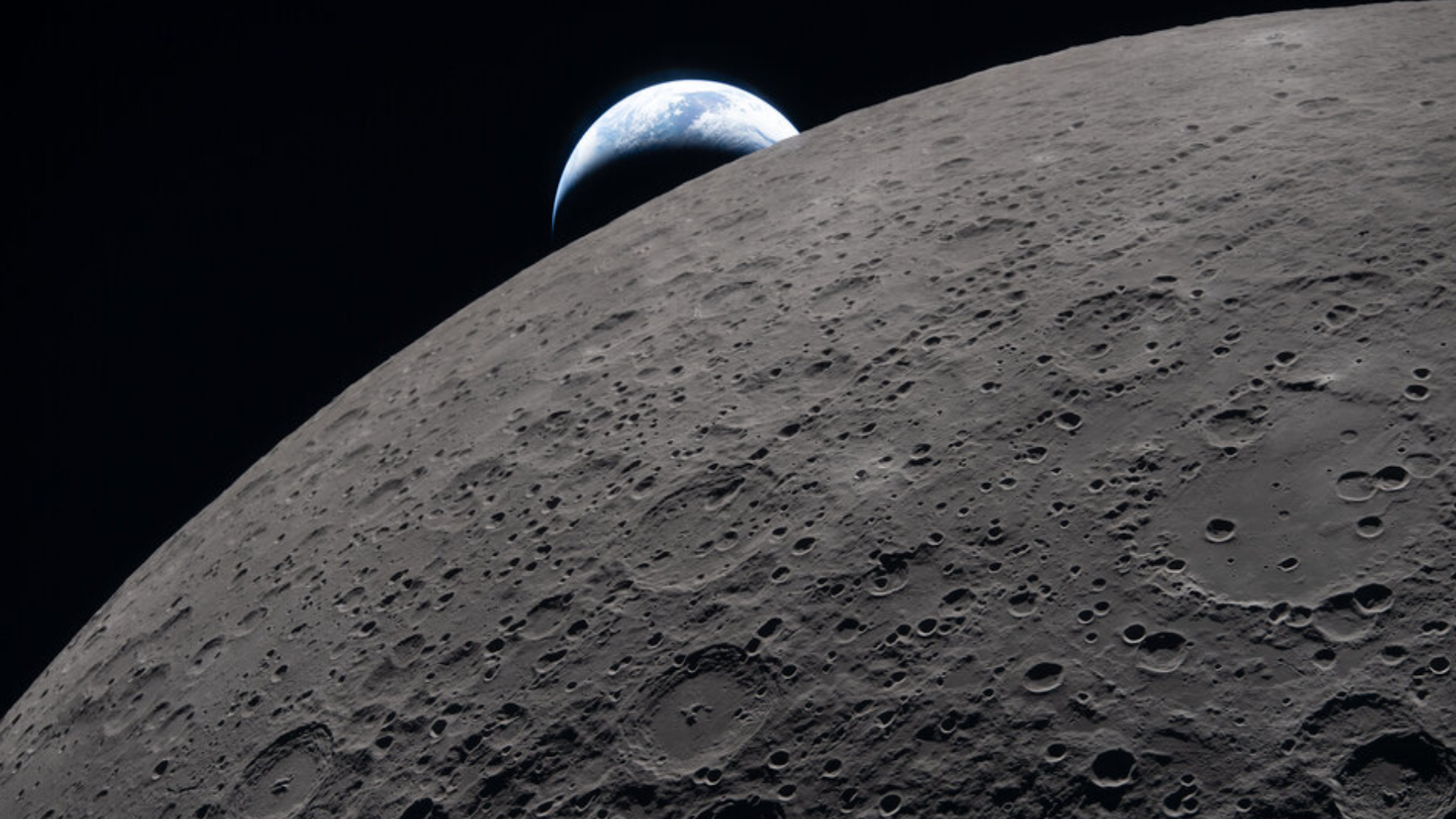
Artemis 2 launched from NASA's Kennedy Space Center in Florida on April 1, carrying out the first crewed cislunar flight since Apollo 17 in 1972. While zipping around the far side of the Moon on April 6, the crew remained vigilant, ready to document any impact flashes on the lunar surface. Their diligence was rewarded.
The four astronauts reported seeing several impact flashes — flickers of light created when a meteoroid hits the lunar surface and vaporizes. "These observations were made with the unaided eye. It's extremely difficult to capture impact flashes with a camera, which is one of the benefits of sending trained crew to observe the Moon," Molly Wasser, media lead for the Planetary Science Division at NASA Headquarters, told Space.com. "Early data indicates that the impact flashes were observed on the far side of the Moon."
The observations were gathered as part of the newly launched Impact Flash citizen science project under the auspices of the Geophysical Exploration of the Dynamics and Evolution of the Solar System (GEODES), a unit within the NASA Solar System Exploration Research Virtual Institute (SSERVI). The Impact Flash effort is designed to gather more data on the location and brightness of flashes throughout recent and upcoming Artemis Moon missions.
"These flashes are vital to scientists who study the Moon," notes the Impact Flash website. "By tracking when and where they happen, scientists can learn how often impacts of different sizes occur, what kinds of craters they create, and how the shock waves travel through the Moon's interior."
The Artemis 2 crew — NASA Commander Reid Wiseman, NASA astronaut Victor Glover, NASA astronaut Christina Koch, and CSA astronaut Jeremy Hansen — spent 10 days in cislunar space, flying a free-return trajectory that brought them as close as 6,513 kilometers to the lunar far side, breaking the record for the farthest human spaceflight from Earth.