
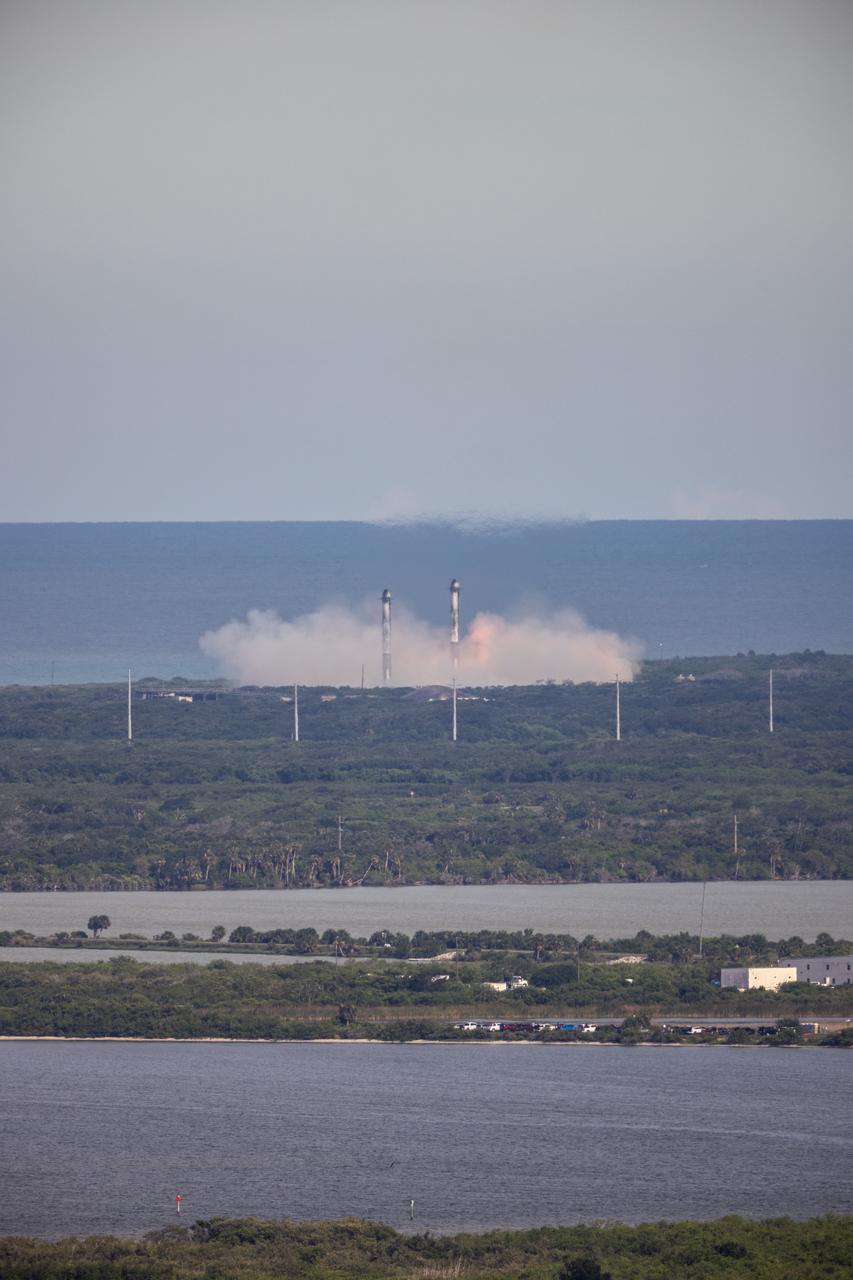
China's reusable-rocket test campaign enters a dense phase: Zhuque-3 Y2, Xingyun-1 and Long March 10B queued for recovery attempts
Summary: A June 3 pre-market note from CLS and a series of broker reports circulated on June 4 collectively confirm that, starting in June 2026, Chinese reusable launch vehicles are entering a dense test window: LandSpace's Zhuque-3 Y2 will retry first-stage vertical recovery in the first half and target the first reflight in Q4, while Deep Blue Aerospace's Xingyun-1, CAS Space's Lijian-family derivatives and CASC Commercial's Long March 10B all queue up for tests. The campaign is bracketed by the late-February long-duration test-firing of the 220-tonne Lanyan methalox engine and the June 1 maiden flight of the 20-tonne Long March 12B, which deliberately did not attempt recovery but validated the relevant aerodynamic shape.
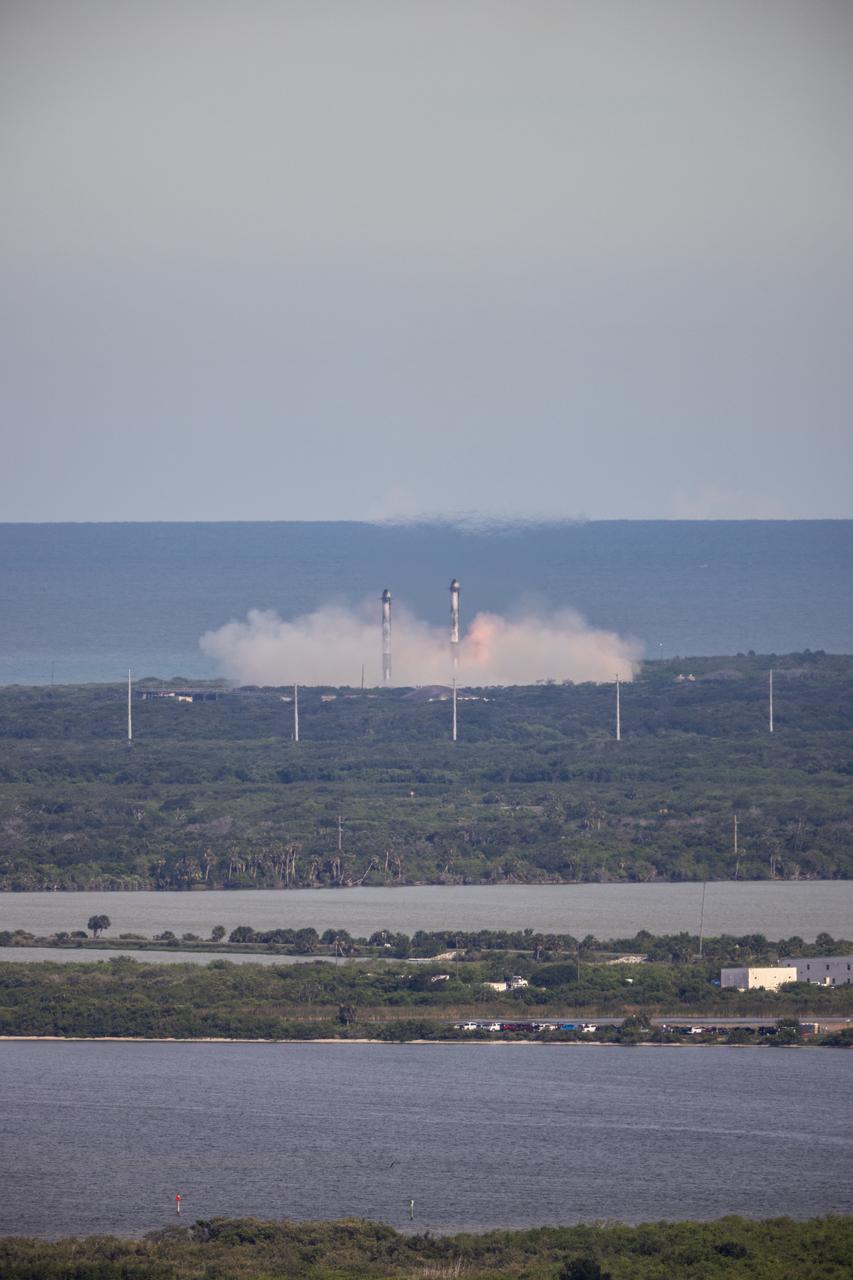
A dense test window opens in June
CLS's pre-market note on June 3, recapping the first-day pop from the Long March 12B maiden flight, is the cleanest public summary of China's 2026 reusable-rocket calendar: "Starting in June, Zhuque-3 Y2, Xingyun-1, Long March 10B and other reusable launchers will run a dense series of tests, and we expect recovery technology to make a real breakthrough."
Four vehicles, four technical bets:
- LandSpace Zhuque-3 (methalox) — the stainless-steel, fully-reusable orbital-class launcher that made its orbital debut on December 3, 2025. The first stage failed its recovery burn and came to rest about 40 meters short of the landing pad. The Y2 vehicle left the factory in April 2026 after a full "return-to-zero" rework and is now aimed at a first-half 2026 recovery retest, with a Q4 first-reuse flight as a stretch goal.
- Deep Blue Aerospace Xingyun-1 (kerolox) — China's other reusable stainless-steel methalox-class orbital vehicle, which gives China a methalox-vs-kerolox two-line comparison inside the same year.
- CASC Commercial Long March 10B — a reusable derivative of the Long March 10A (which is to launch the Mengzhou crewed spacecraft), aimed at the late-2020s lunar-landing build-up.
- CAS Space Lijian derivatives — the solid-propellant reusable line, leaning on the fact that the solid Lijian-1 has already reached "hundred-satellites-to-orbit" cadence in 2025.
From "first-flight failure" to "Y2 retest": the engineering barrier of reuse
Reusability is the only technology that makes the large commercial-space numbers add up. The 744-satellite first-stage Qianfan Constellation is on its way to a final multi-thousand-satellite configuration, and Shanghai Yuanxin Satellite has publicly targeted more than 108 satellites launched in 2026 alone. At 18 satellites per typical launch, that is six launches for 108 satellites and roughly 30 launches for 500; at 1,000 satellites, almost 60 — and at scale, single-use rockets simply make the business case close on negative gross margin.
The catch is that reusability is a hard engineering problem. SpaceX's Falcon 9 Block 5 took seven years of iteration between its 2017 freeze and the 2024 era of 20+ flights on a single booster. The Chinese industry is following the same path — and the Zhuque-3 December failure is a textbook case of "first engineering flight surfaces the problem." The booster reached orbit, the fairing separated, the second-stage re-started, all normal. The failure was specifically in the landing-burn ignition sequence — exactly the kind of issue a Y2 retest is designed to surface in a controlled setting rather than in a customer launch.
The hidden line in Long March 12B: an un-recovered maiden flight
It is worth pausing on the Long March 12B (CZ-12B) that flew successfully on June 1. It is not a reusable rocket in the strict sense — it is a 20-tonne-to-LEO single-core vehicle that is "preparing to attempt first-stage recovery later" rather than recovering on its first flight. But it flew the return-leg aerodynamic shape as part of its mission profile. That is the cheap data point: a 72-meter, 4.37-meter-diameter single-core launcher demonstrating the airflows around a returning first stage is the same engineering evidence base that a true recovery test will need a year or two from now. CZ-12B flew from a brand-new, CASC Commercial-built pad at the Dongfeng Commercial Space Innovation Pilot Zone — the zone's first self-built research-and-test launch pad, sized for 1,000-tonne-class, 4-meter-class launchers and their iterative test flights.
The 220-tonne "Lanyan" engine: the long pole that had to clear first
Before the dense test window could even be scheduled, the engines had to be ready. In late February 2026, LandSpace announced that its 220-tonne methalox full-flow staged-combustion Lanyan engine had completed a full-system long-duration test fire, marking a clean step in the high-thrust, high-performance liquid-engine category. By the end of February 2026, LandSpace's engine cumulative test time had passed 160,000 seconds with 41 engines having flown — the engineering foundation that lets a Y2 retest be scheduled at all.
Why now: the demand side finally pulls the supply side
The 2026 calendar is not a coincidence. As of June 1, the Qianfan Constellation alone had grown to 164 satellites on orbit; the rest of the year requires sustained, multi-launch-per-month cadence. China SatNet's GW constellation is on a similar curve. A reusable launcher is no longer "nice to have" — it is the cost-of-goods-sold line that makes the whole LEO mega-constellation business model work. The June test window is the moment that the supply side finally matches the demand side.
Sources (original pages)
- LandSpace Zhuque-3 and other reusable launchers to enter a dense test window — CLS / National Business Daily — 2026-06-02 13:00
- Pre-market headline: commercial-space surprise rally — Sina Finance — 2026-06-03 08:28
- Zhuque-3 Y2 enters final preparation for vertical-recovery retest — Pengpai — 2026-05-13
- LandSpace chief designer Zhang Xiaodong: Zhuque-3 Y2 recovery retest in H1, first reuse flight in Q4 — 10jqka — 2026-04-03
- LandSpace 220-tonne engine completes long-duration test fire — Toutiao / LandSpace official — 2026-03-06
- China's Long March 12B Y1 successfully completes maiden flight — Xinhua / CCTV — 2026-06-01