
Viewing the New Glenn Explosion from Space: Planet Labs Imagery Shows LC-36 Pad Scorched, Bezos Tours Site with NASA Chief Isaacman and Pledges 'Gradatim Ferociter'
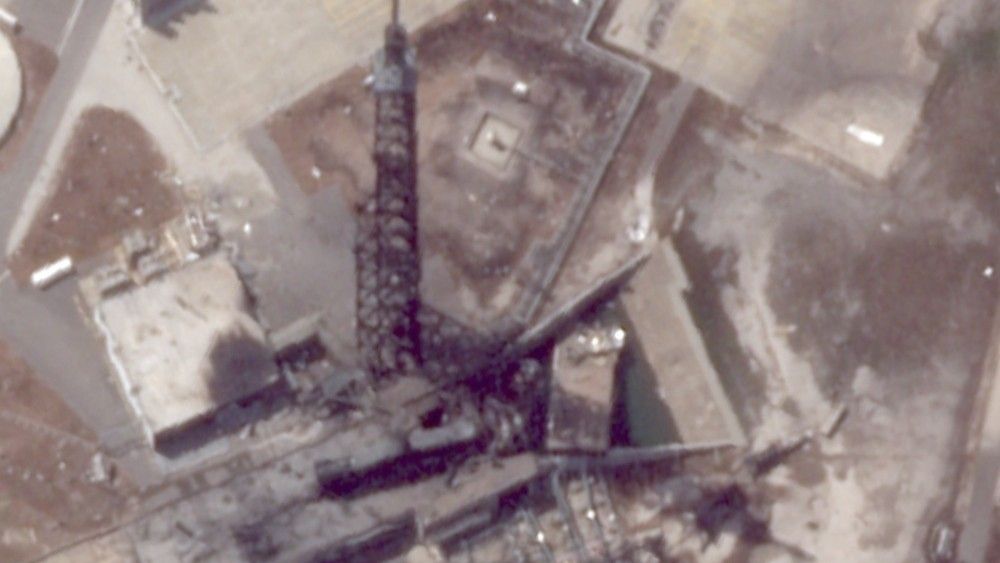
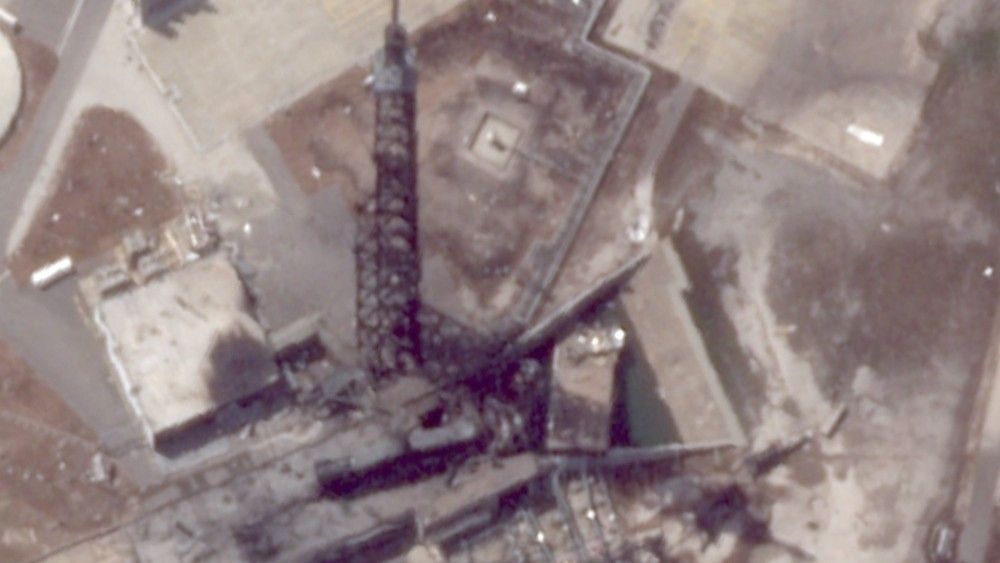
Summary: On May 28, Blue Origin's New Glenn rocket exploded during a static-fire test at Cape Canaveral's LC-36 launch complex, destroying the vehicle and severely damaging the pad. Four days later, Planet Labs' SkySat-C9 commercial Earth-observation satellite imaged LC-36 from orbit on May 31, and commercial space-imagery firm Spacefromspace processed and released enhanced views of the pad that clearly show burn scarring consistent with the ground reports. Space.com published the satellite-angle story on June 1. In parallel that week, Blue Origin CEO Dave Limp wrote on X on May 31: 'We will start clearing the pad soon and have a good rebuild plan in place'; founder Jeff Bezos and NASA Administrator Jared Isaacman toured LC-36 together on May 30, after which Bezos posted on X the Blue Origin signature Latin motto 'Gradatim Ferociter' ('step by step, ferociously') with the pledge: 'We will get back to flight, and we will get to the moon.'
Planet Labs SkySat-C9's View from Orbit
The blast was powerful enough that a commercial satellite 600 kilometers above the ground could pick up the scar on LC-36. Planet Labs' SkySat-C9, launched in 2016, is a sub-meter-class Earth-imaging satellite that can resolve ground features at roughly 50 centimeters from its 450 km orbit. Spacefromspace obtained SkySat-C9's raw data from its May 31 overflight of Cape Canaveral and enhanced the LC-36 region, making the contrast between the scorched blast area and the surrounding vegetation clearly visible.
At the spatial scale shown in the imagery, the damage is not limited to LC-36's main launch mount itself. The surrounding ground, the collapsed lightning-tower footprint and the nearby service-tower base all show signs of scorching or structural damage, consistent with eyewitness reports from the site. Photos Blue Origin released earlier show the lightning tower toppled and the umbilical tower twisted by the shock front, but ground-based viewpoints could not capture the full blast footprint, and the satellite view fills in that gap.
This is the latest example of commercial remote-sensing satellites being used routinely to monitor major space-incident sites. Planet Labs' SkySat constellation (21 satellites in orbit) can revisit any point on Earth at daily cadence, and has historically captured SpaceX test-flights, booster-landing failures and ground-side explosions in detail.
Bezos and the NASA Chief Tour the Site
On the same day the satellite imagery was released, Blue Origin's and NASA's top decision-makers appeared at the blast site in person. On May 30, Blue Origin founder Jeff Bezos and NASA Administrator Jared Isaacman toured the LC-36 wreckage together — the first time both were documented at the site since the accident. Isaacman subsequently posted on X thanking Bezos for the visit and promising NASA's 'full support' in the investigation going forward.
After the tour, Bezos posted a one-line statement on X: 'Thank you for being here today. We will get back to flight, and we will get to the moon. Gradatim Ferociter.' The post marked the first time Blue Origin's Latin motto 'Gradatim Ferociter' ('step by step, ferociously') has been formally invoked during the company's response to a major failure, and signaled that the company does not intend to retreat from its long-term lunar commitments because of the NG-4 explosion.
Blue Origin CEO Dave Limp followed up the next day (May 31) with a more concrete engineering statement on X: 'We will start clearing the pad soon and have a good rebuild plan in place.' That was the first time Blue Origin's post-accident language used 'rebuild' rather than 'repair,' suggesting the damage to LC-36 had crossed the threshold from patchable degradation to something more structural. Limp still has not released a public schedule or cost estimate, and the FAA's accident investigation and license-status review remain in progress.
Two Historical Recovery Benchmarks
The LC-36 rebuild timeline is not without precedent in the commercial launch industry. In the same report, Space.com cited two prior 'ground static-fire or fueling-test explosions' whose root cause and scale were broadly similar to New Glenn NG-4:
Antares 28 October 2014 explosion: Orbital Sciences Corporation (later Northrop Grumman) was conducting a static-fire test of an Antares-130 at NASA's Wallops Flight Facility Pad 0B when the engine exploded, destroying the vehicle and heavily damaging the launch mount and nearby infrastructure. Pad 0B did not return to flight for nearly two years — until October 2016.
SpaceX 1 September 2016 Falcon 9 explosion: During a static-fire test ahead of the AMOS-6 mission at Cape Canaveral's LC-40, a helium bottle inside the Falcon 9 upper-stage liquid-oxygen tank underwent a catastrophic pressure breach; the vehicle was destroyed and LC-40 was severely damaged. SpaceX, which had Kennedy Space Center's LC-39A effectively converted as a backup pad, returned to flight from LC-40 about a year later (September 2017).
Both prior incidents measured their return-to-flight windows in 'years.' Blue Origin currently has only one pad capable of supporting a rocket the size of New Glenn — LC-36. The adjacent Cape Canaveral complex LC-11 is also owned by Blue Origin, but it currently supports only the much smaller, sub-orbital New Shepard. That structural reality means the entire New Glenn flight cadence — including launches for the Amazon Leo commercial constellation and the NASA Moon Base 1 cargo lander Blue Moon MK1 plus the later crewed Blue Moon MK2 — is frozen until LC-36 is rebuilt. This is exactly the structural risk industry analyst Casey Curlee flagged in the earlier June 1 Space.com follow-up: 'It doesn't mean the U.S. has lost the moon, but NASA will have to make significant adjustments to its Artemis and Moon Base plans to accommodate this reality.'
Status as of June 1
As of June 1, Blue Origin has not published a formal LC-36 rebuild schedule, and the FAA's accident-cause investigation is ongoing. The NG-4 mission itself — which was to have launched 48 Amazon Leo internet satellites and whose payload was preserved intact before the explosion — cannot be re-manifested until a new pad is in place. The Blue Moon MK1 cargo lander originally scheduled for a fall 2026 New Glenn debut, and the later crewed Blue Moon MK2, will both have to be re-baselined against the actual LC-36 rebuild pace.