
What Blue Origin's New Glenn Explosion Means for NASA's Moon Plans
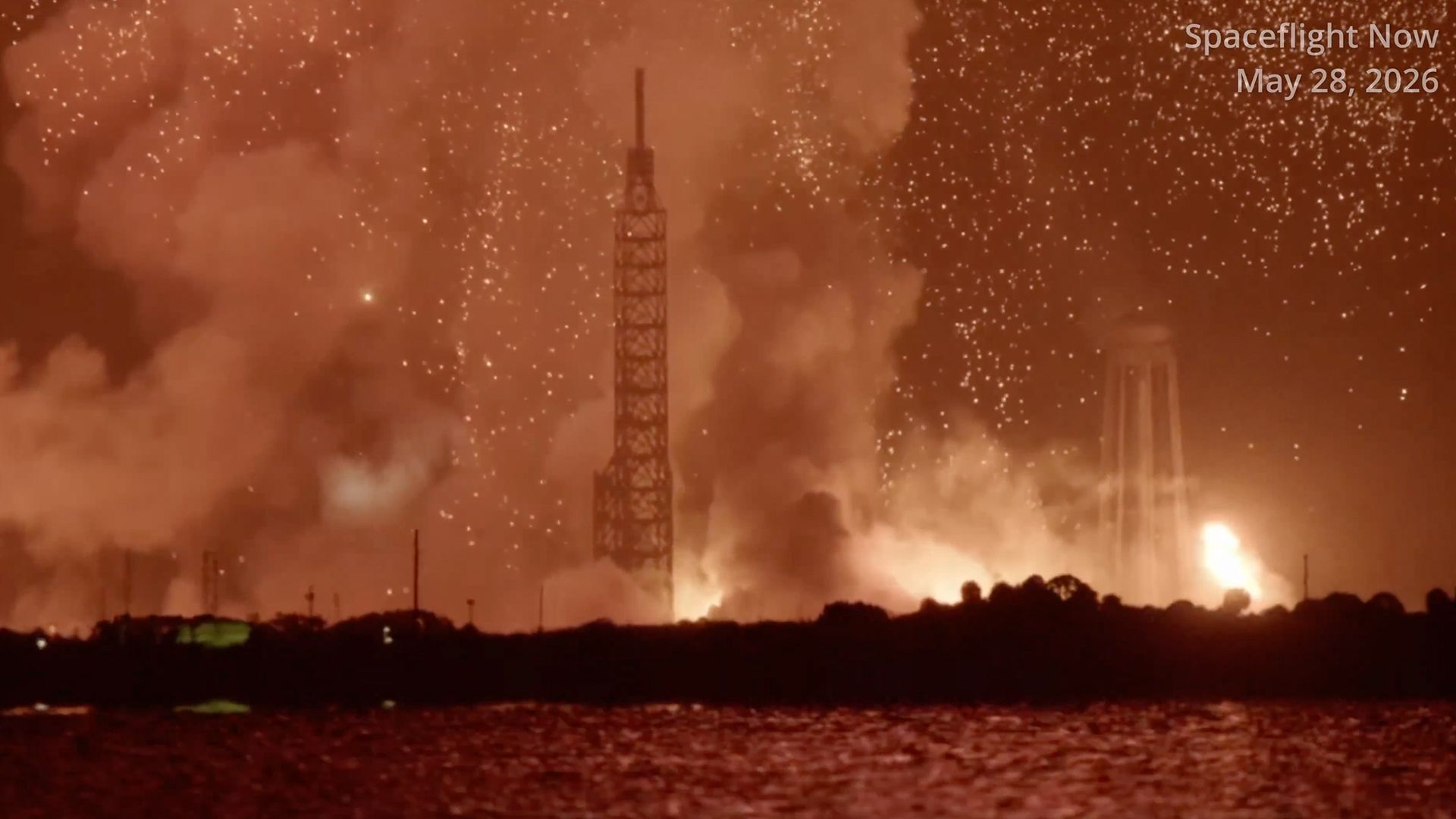
Summary: Four days after Blue Origin's New Glenn rocket exploded during a static-fire test at Cape Canaveral's LC-36 launch pad on May 28, Space.com published a follow-up analysis on June 1 quoting industry analyst Casey Curlee on the cascading impact for NASA's lunar program. Unlike SpaceX after its 2016 LC-40 explosion — when the company returned to flight within four months using backup pads at Kennedy Space Center and Vandenberg — Blue Origin operates New Glenn from LC-36 only, and that pad is now destroyed. The fallout puts pressure on the Blue Moon MK1 uncrewed lander (slated for fall 2026 to deliver the first building blocks of NASA's Moon Base 1), the Blue Moon MK2 crew-capable variant, and ultimately NASA's Artemis 3 (2027) and Artemis 4 (2028) timelines. Curlee's summary: "This doesn't mean we've lost the moon ... but NASA is going to have to significantly readjust its Artemis and Moon Base programs to account for the fact that this happened."
Background
The May 28 explosion occurred during New Glenn's last major milestone before a planned June 4 liftoff. A static test fire of the vehicle's seven BE-4 engines triggered a liquid oxygen / methane leak that froze hydraulic lines, causing a detonation that destroyed the booster and severely damaged LC-36's lightning mast and umbilical tower. The 48 Amazon Leo internet satellites that were to fly on NG-4 were not yet mated to the rocket at the time of the blast and survived intact.
This is New Glenn's second major failure in two months. In April, the NG-3 mission's second stage malfunctioned in flight, stranding AST SpaceMobile's BlueBird 7 in an unstable orbit and triggering an FAA-required investigation that grounded New Glenn until May 21 — barely a week before the NG-4 explosion. Curlee was careful to draw a distinction: the NG-3 anomaly was an in-flight upper-stage failure; the NG-4 mishap was a ground-test LOX/methane leak. Different root causes, but the operational result is the same: New Glenn is grounded once again.
Cascading Impact on NASA's Moon Program
Blue Moon MK1 (uncrewed lander) — fall 2026 debut likely slips
Blue Moon MK1 is Blue Origin's uncrewed cargo lander developed for NASA's Moon Base 1 (the precursor to crewed Artemis landings). Its maiden flight was slated for fall 2026 on a New Glenn, delivering the first surface elements of the base. The LC-36 explosion punches directly through that window: even if pad reconstruction completes within months (Blue Origin has not announced a timeline), the MK1's full mission rehearsals, propellant-loading tests, and flight-software final qualification all need to be re-run on a rebuilt pad.
Blue Moon MK2 (crew-capable lander) — slip cascades downstream
MK2 is the crew-capable variant NASA selected for Artemis 4 (planned for late 2028), providing a second lunar lander alongside SpaceX's Starship HLS in a dual-supplier architecture. MK1 flight data is a critical input for MK2's human-rating qualification, so an MK1 slip propagates directly into MK2's certification window.
Artemis 3 (2027) loses its dual-supplier redundancy
Artemis 3, currently targeted for 2027, was repositioned earlier this year as a near-rectilinear halo orbit rendezvous demonstration — a stepping stone to the 2028 crewed lunar landing. As Curlee put it: "It's a good lander, it's a good system, but they cannot get it to the moon without their New Glenn, and their New Glenn is grounded." If Blue Origin cannot restore New Glenn's orbital capability by mid-2027, Artemis 3's surface mission will have to rely entirely on SpaceX Starship HLS, eliminating the dual-supplier redundancy NASA built into the program.
Pad scarcity is New Glenn's structural vulnerability
Curlee drew a direct comparison to SpaceX's September 2016 LC-40 explosion during the Amos-6 static fire: SpaceX returned Falcon 9 to flight about four months later using NASA's adjacent LC-39A and Vandenberg SFB, and didn't return to LC-40 itself until December 2017. Blue Origin's only New Glenn-capable pad was LC-36 — and it is now destroyed. Until LC-36 is rebuilt, New Glenn physically cannot fly.
Industry View
Curlee's framing: "Launch pads are a pretty high-value real estate item. There's only a few launch pads that can handle the size of the New Glenn, and the one that [Blue Origin] had was LC-36, which has now been destroyed. So this is a pretty significant setback." She added, on the broader question of whether NASA's lunar ambitions are now in jeopardy: "I think overall this doesn't mean that we've lost the moon ... but NASA is going to have to significantly readjust its Artemis and Moon Base programs to account for the fact that this happened."
As of publication, Blue Origin has not announced an LC-36 reconstruction timeline, an FAA mishap investigation start date, or revisions to its post-NG-4 flight manifest. NASA's public affairs office did not respond to Space.com's request for comment before the article was published.
Sources (original pages)
- Space.com — 'A pretty significant setback': How Blue Origin's rocket explosion affects NASA's moon plans (Josh Dinner, June 1, 2026)
- Spaceflight Now — Blue Origin's New Glenn rocket explodes during prelaunch testing at Cape Canaveral (May 29, 2026, initial incident report)
- Spaceflight Now — Blue Origin's New Glenn rocket grounded after launch mishap (April 22, 2026, post-NG-3 FAA grounding)