
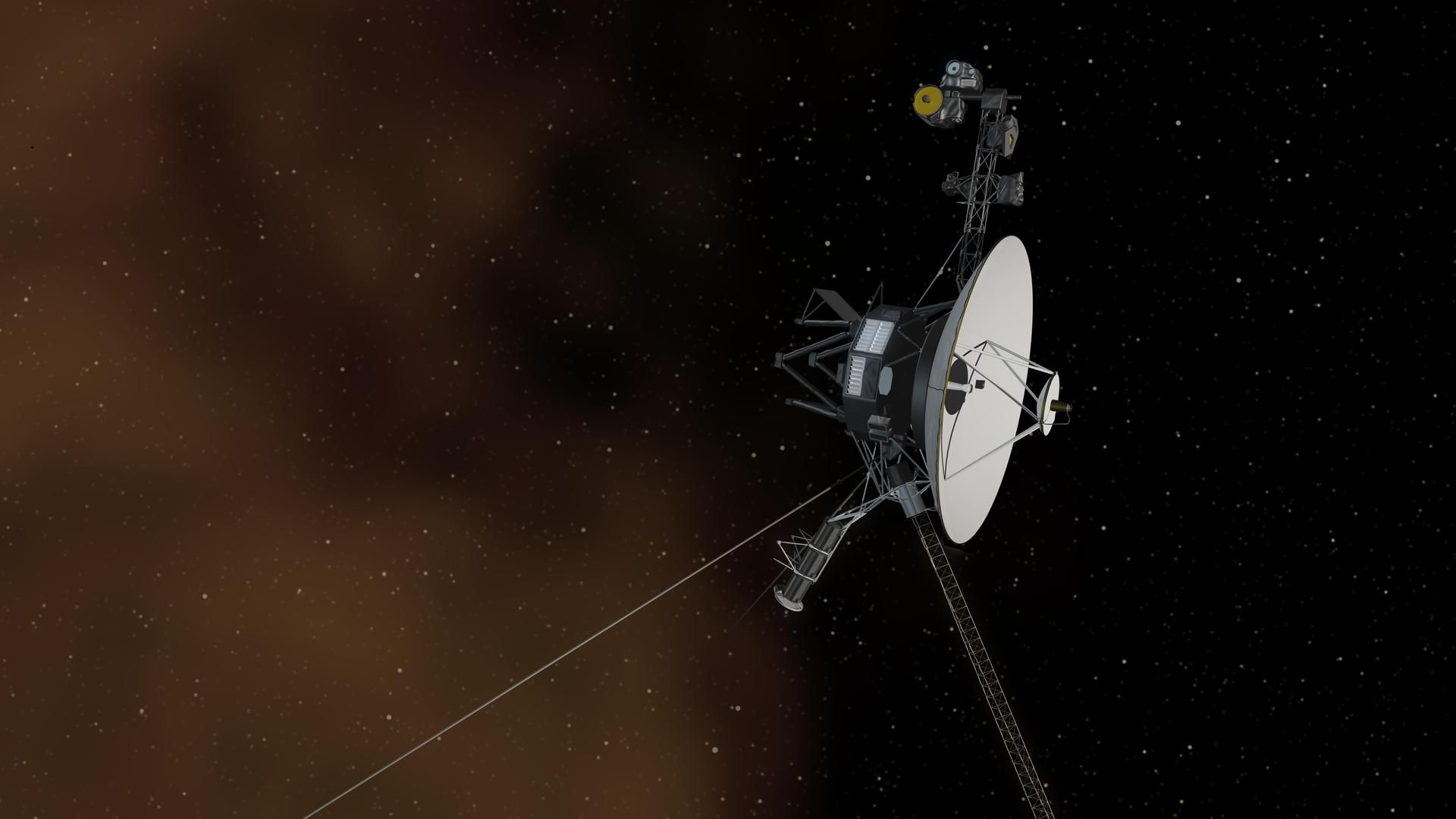
NASA Voyager Probes Power Dwindling; 'Big Bang' Maneuver Planned to Extend Mission Life
Summary: NASA revealed on May 9, 2026 that the legendary twin Voyager spacecraft, launched in 1977, are running out of power and the mission team is preparing a risky engineering activity nicknamed the "Big Bang" to extend their operational lives. Voyager 1 now has only two instruments running while both probes continue to lose about 4 watts of power annually.
NASA revealed on May 9, 2026 that its twin Voyager spacecraft — Voyager 1 and Voyager 2 — are in a race against power decay, with the mission team preparing a critical maneuver codenamed the "Big Bang" to keep the iconic probes exploring interstellar space as long as possible.
The Voyager probes launched in 1977 on a mission to explore the giant planets of our solar system, far exceeding their expected operational lifetimes. Voyager 1 crossed into interstellar space in 2012, and Voyager 2 followed suit in 2018. Both spacecraft rely on nuclear power systems that generated 470 watts at launch — a figure that has dwindled dramatically over nearly five decades of service.
In recent years, NASA has been systematically shutting down instruments one by one to conserve power. The probes continue to lose approximately 4 watts of power annually. Voyager 1 shut down its cosmic ray instrument in February 2026 and its Low-Energy Charged Particles (LECP) instrument in April, leaving only a magnetometer and plasma wave subsystem operational. Voyager 2 retains three working instruments.
The mission clock is ticking. NASA's Jet Propulsion Laboratory (JPL) has been preparing an upcoming engineering activity — nicknamed the "Big Bang" — to maximize the science output of the Voyager mission and extend the operational lives of both probes as long as possible in the face of dwindling power resources.