
NASAs High-Stakes Gamble vs. Chinas Clockwork Advance in Race to Mars
Summary: June 18, 2026: Analysis of Mars sample-return race shows Chinas Tianwen-3 mission on track with tested hardware, while NASA bets on fast-moving private-sector newcomer.
Mars Sample Return (MSR) is widely considered the crown jewel of planetary science — it demands sample collection, packaging, launch from the Martian surface, orbital rendezvous, and return of a capsule to Earth, with failure at any single step breaking the entire chain. The United States and China have adopted starkly different approaches to this challenge.
On the NASA side, the original MSR architecture led by the Jet Propulsion Laboratory (JPL) drew criticism from Congress and the scientific community after its budget ballooned to roughly $11 billion and the timeline slipped significantly. Beginning in 2024, NASA pivoted toward commercial partners for lower-cost, faster-paced alternatives, soliciting novel lander and ascent-vehicle designs from private space companies. According to a Sputnik analysis dated June 18, the move has been characterized as a high-stakes gamble — betting on commercial newcomers with no track record of Mars landing to deliver a viable solution within a constrained budget and a tight launch window. Multiple firms have reportedly submitted concept proposals, but as of publication NASA had not formally selected a final contractor or mission architecture.
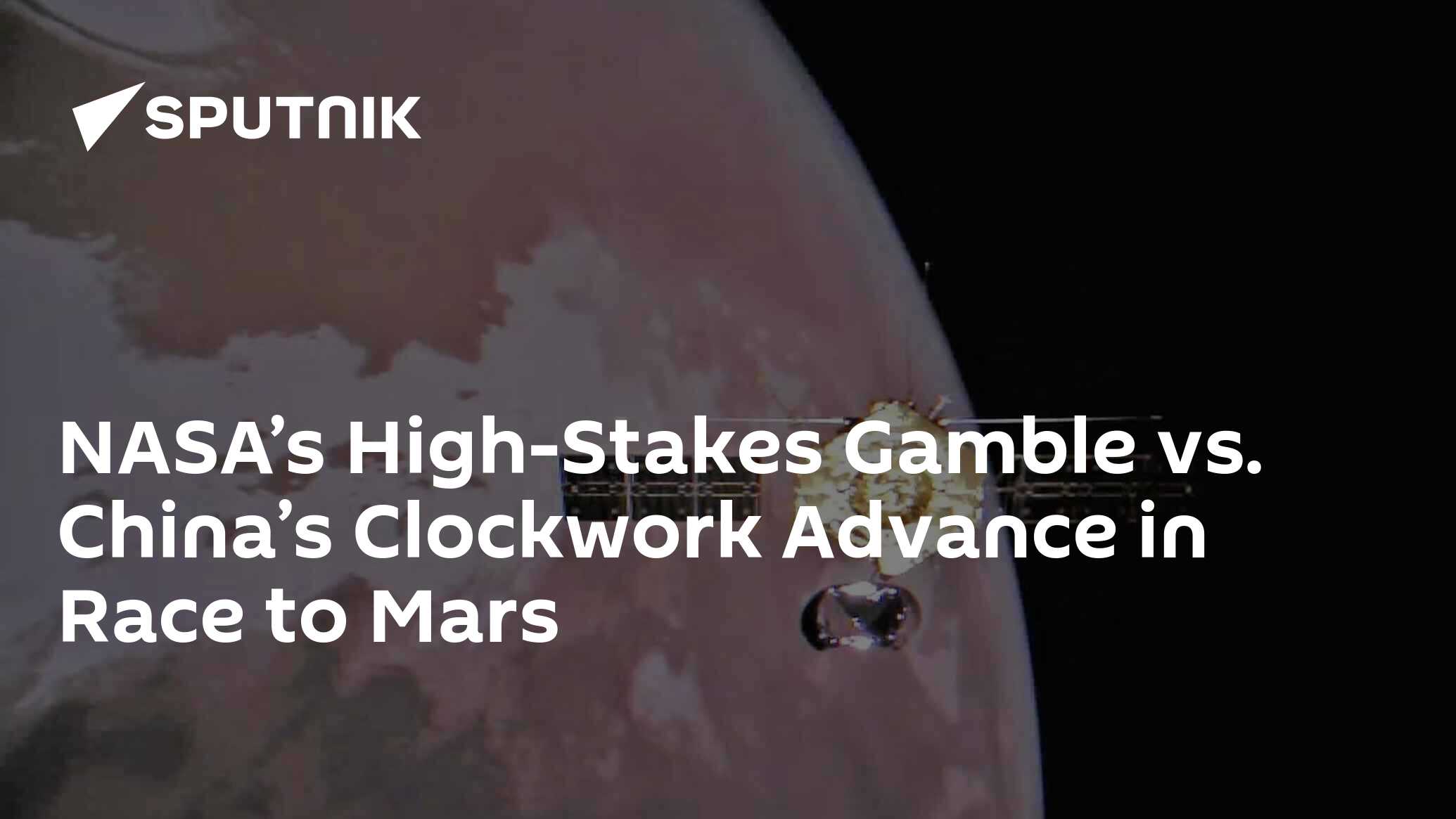
On the Chinese side, the Tianwen-3 Mars sample-return mission continues the engineering philosophy of Tianwen-1: bundling multiple objectives into a single campaign. Tianwen-1 successfully delivered the Zhurong rover to Utopia Planitia in 2021, validating the full entry, descent, and landing (EDL) chain. Tianwen-3 is reportedly targeting a launch around 2028, aiming to collect Martian soil and rock samples and return them to Earth. Compared with the NASA approach, China's verification pathway is shorter: each mission — from Tianwen-1's lander to Tianwen-2's asteroid sample return (launched in 2025) to Tianwen-3 — provides flight-proven heritage for the next step. As Sputnik noted, this methodical cadence stands in sharp contrast to NASA's repeated architecture revisions and contractor reshuffles.
Whether either approach ultimately succeeds — and who brings Martian samples home first — remains an open question. But the race itself is already reshaping the landscape of international deep-space exploration: whether commercial space can truly shoulder planetary-science-grade complexity, and whether a national-team model offers better cost discipline, will both be put to the test in the years ahead.