
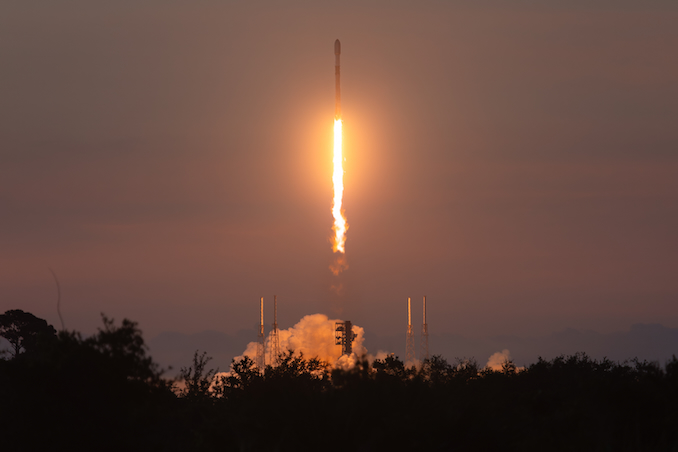
SpaceX Falcon 9 Booster B1067 Completes Record-Breaking 35th Flight
Summary: On June 8, 2026, SpaceX launched a Falcon 9 rocket from Space Launch Complex 40 at Cape Canaveral Space Force Station, carrying 29 Starlink broadband internet satellites to low Earth orbit on the Starlink 10-35 mission. The booster, tail number B1067, completed its record-setting 35th flight, making it the most-flown orbital rocket first stage in history.
Launch Details
Liftoff occurred at 6:13:50 a.m. EDT (1013:50 UTC) from SLC-40. The rocket flew on a north-easterly trajectory. The 45th Weather Squadron had forecast a 90 percent chance of favorable weather at the opening of the window, dropping to 75 percent later.
Approximately 8 minutes after liftoff, booster B1067 returned to Landing Zone 1 at Cape Canaveral. SpaceX subsequently confirmed successful deployment of all 29 Starlink satellites.
B1067: The Fleet Leader
As of this launch, SpaceX operates seven Falcon 9 boosters that have flown more than 25 times:
| Booster | Total Flights |
|---|---|
| B1067 | 35 |
| B1071 | 33 |
| B1077 | 28 |
| B1078 | 28 |
| B1080 | 26 |
SpaceX is demonstrating that Falcon 9 boosters can fly up to 40 times each. In documents published ahead of its initial public offering, scheduled for June 12, SpaceX noted that the 40-flight ceiling reflects both the strategic transition to Starship (expected to materially reduce future Falcon 9 flight demand) and conservative estimates of booster refurbishment costs.
Starlink Constellation Growth
With the 29 satellites from Starlink 10-35, the Starlink constellation now exceeds 10,500 spacecraft in orbit. SpaceX maintains a near-daily launch cadence for Starlink missions from both Cape Canaveral and Vandenberg Space Force Base.