
Meteor Storms May Threaten Artemis 4: NASA Weighs the Risk to Future Moon Missions
Summary: Space.com reported on June 7 that Artemis 4 — NASA's first crewed lunar landing mission since the Apollo era, currently slated to launch in early 2028 — could face scheduling friction with a predicted Perseid meteor outburst on August 12, 2028. American Meteor Society Fireball report coordinator Robert Lunsford told Space.com that four possible meteor outbursts have been identified over the next ten years, including Leonid peaks in 2033 and 2034. NASA Meteoroid Environments Office lead Bill Cooke noted that only a handful of the more than 1,000 known meteor showers exceed the sporadic background by more than 5%, citing the Geminids as the strongest annual shower. Orion has been validated through hypervelocity impact testing for MMOD protection, and the STS-51 Discovery delay in 1993 and an uncrewed Vandenberg science mission postponement in 2000 both established precedent for NASA scrubbing launches to dodge meteor storm peaks.
A timer from deep space
NASA estimates that approximately 48.5 tons (44,000 kilograms) of naturally occurring space debris falls into Earth's atmosphere every day, ranging from sub-millimeter micrometeoroids to larger particles that produce spectacular fireballs. The space around Earth grows measurably denser during meteor showers, as the planet plows through debris streams continuously shed by asteroids and comets orbiting the Sun.
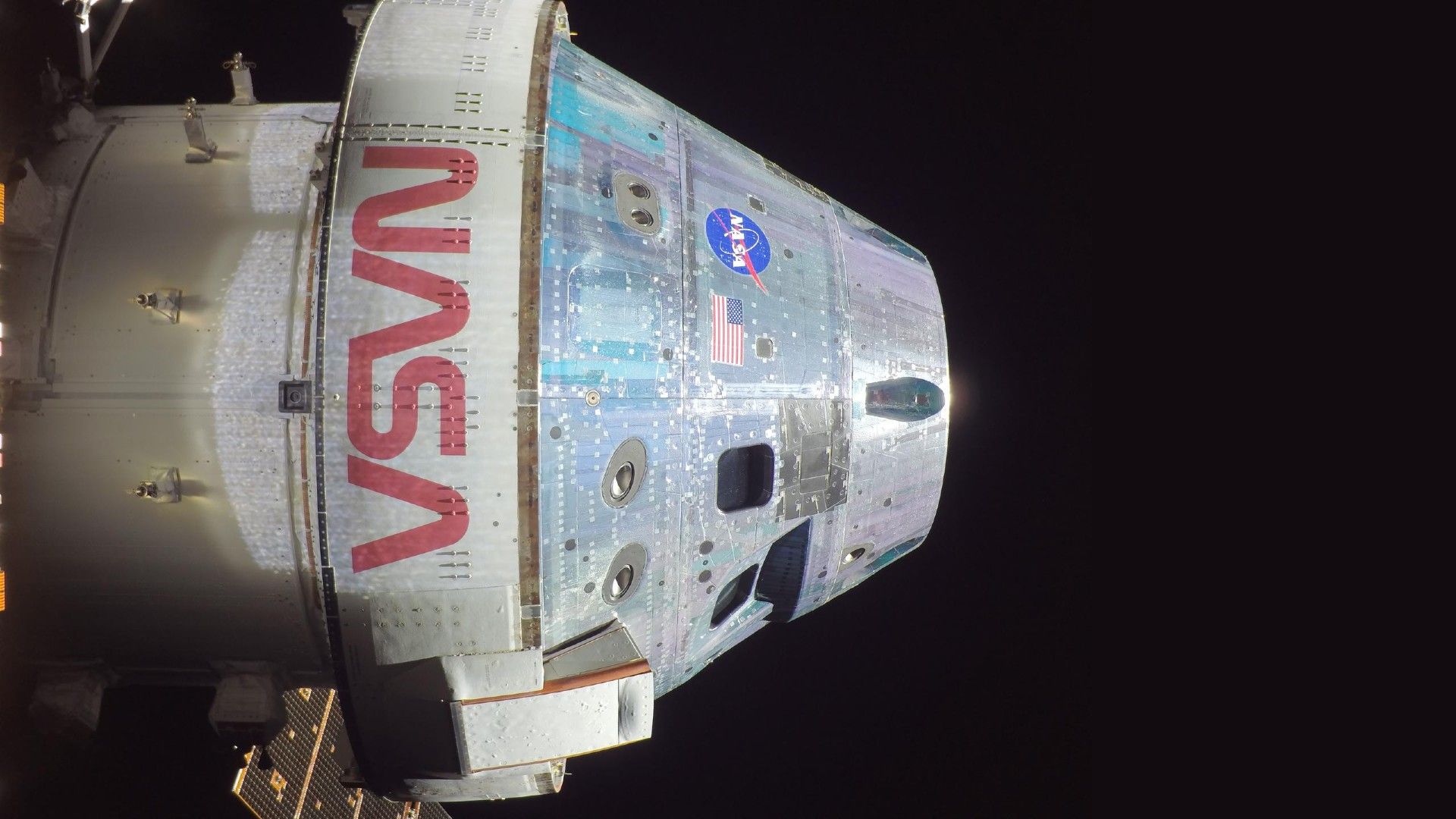
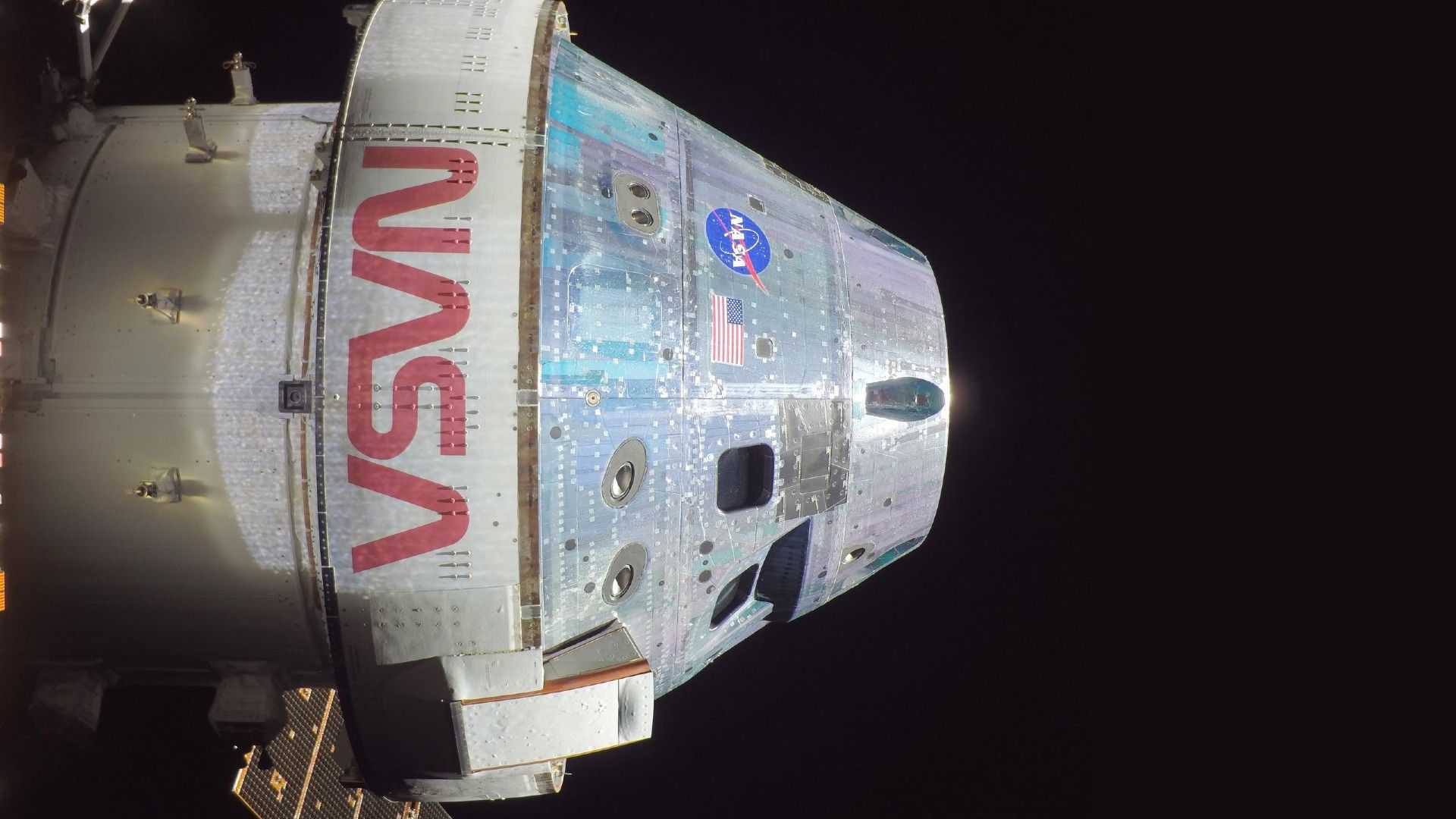
Micrometeoroids travel at hypervelocity, averaging 22,000 miles per hour (about 34,405 kilometers per hour) — fast enough that even a sand-sized grain striking a high-speed spacecraft releases devastating kinetic energy. Such impacts can penetrate or deform a spacecraft's hull, damage critical systems, and in the worst case trigger catastrophic rupture. The risk also extends to Orion's heat-resistant outer tiles: a hole punched through those tiles by a micrometeoroid on the trans-lunar trajectory would compromise the thermal protection Orion relies on during atmospheric reentry. The article references a parallel event from November last year, when China's Shenzhou-20 astronaut Chen Dong discovered a crack in his spacecraft's viewport — a reminder that the micrometeoroid and orbital debris threat is never far from low Earth orbit either.
Orion's armor and the hypervelocity test campaign
Orion was designed from the outset with MMOD protection as a hard requirement. Project engineer Heckwolf, quoted in the article, explains that material selection and thicknesses have been optimized for both micrometeoroid and orbital debris impact, and that hypervelocity impact testing confirms impact physics, characterizes damage survivability, and verifies the Orion MMOD design's actual performance. The Artemis mission trajectory and launch window are also subject to recurring meteoroid-environment risk assessments — only the most severe events ever rise to the level of a launch decision variable.
Cooke, in an email to Space.com, provides a quantitative baseline: of the more than 1,000 known meteor showers, only a handful — the Geminids being the canonical example — exceed the sporadic background by more than 5%. That 5% threshold is the dividing line between "ordinary" and "anomalous." For most launch windows the risk assessment will land on "acceptable," but when a forecast storm or outburst happens to overlap a mission profile or an EVA window, the conclusion flips.
Four red marks on the next decade
Lunsford identifies four possible meteor outbursts on the AMS calendar: the Perseids on August 12, 2028, and three Leonid peaks — November 17, 2033, and November 18 and 19, 2034. The article notes that Artemis 4 is currently slated to launch in early 2028, though any unforeseen delay could push the window backward and into direct conflict with the Perseid outburst. If such an unlucky overlap materializes, a mission delay would be the reasonable call — and NASA has done it before. In 1993, the STS-51 Discovery mission was postponed to avoid the Perseid peak; in 2000, an uncrewed science mission out of Vandenberg Space Force Base was rescheduled to sidestep a Leonid outburst.
NASA has also deployed analogous protocols on its flagship orbital telescopes. The James Webb Space Telescope and Hubble routinely rotate their large primary mirrors away from meteor radiant directions during major showers to reduce exposed cross-section.
A parallel problem for China's program
The Space.com article mentions China's Shenzhou-20 viewport crack from last November as an adjacent case without elaborating. That incident forced the Shenzhou-20 crew to use a different return craft and stands as a significant warning for China's crewed program — prompting renewed scrutiny of window glass thickness, damage tolerance, and inspection cadence in low Earth orbit. As Artemis 4 heads for the Moon and China's own crewed lunar program advances in parallel, the international community's accumulated MMOD research, testing, and operational experience will be relevant to every crewed mission planning to leave low Earth orbit.
Methodology note
This article synthesizes the Space.com piece published on June 7, 2026, with all details drawn from the original report or directly quoted from it; the English text translates and reorganizes the source without adding facts absent from the original. The Shenzhou-20 viewport crack incident is mentioned in the source only as a brief adjacent reference, and this article does not cross-verify the latest details against Chinese official sources — readers seeking deeper background on that event should consult subsequent CMS publications. Artemis 4 mission timing and risk-assessment figures cited above come from NASA and AMS public statements current as of June 7, 2026.
Bilingual term reference
| English | 中文 | Brief note |
|---|---|---|
| Micrometeoroid and Orbital Debris (MMOD) | 微流星体与空间碎片 | NASA risk-assessment standard term |
| Hypervelocity impact testing | 超高速冲击测试 | Validates MMOD protection design |
| Meteor storm / outburst | 流星暴雨 / 异常爆发 | Anomalously high meteor activity above sporadic background |
| Sporadic background | 偶发背景 | Baseline daily micrometeoroid flux |
| Meteoroid Environments Office | 流星体环境办公室 | NASA Marshall facility; lead Bill Cooke |
| American Meteor Society (AMS) | 美国流星协会 | Fireball report coordinator Robert Lunsford |
| Trans-lunar injection / cislunar trajectory | 月地转移轨道 | Spacecraft path from LEO to the Moon |
| Heat-resistant outer tiles | 隔热瓦 | Orion's reentry thermal protection |
| Leonids | 狮子座流星雨 | Possible outbursts in 2033/2034 |
| Perseids | 英仙座流星雨 | Possible outburst on August 12, 2028 |