NASA's X-59 quiet supersonic jet finally breaks the sound barrier: Mach 1.1, 713 mph, 43,400 feet
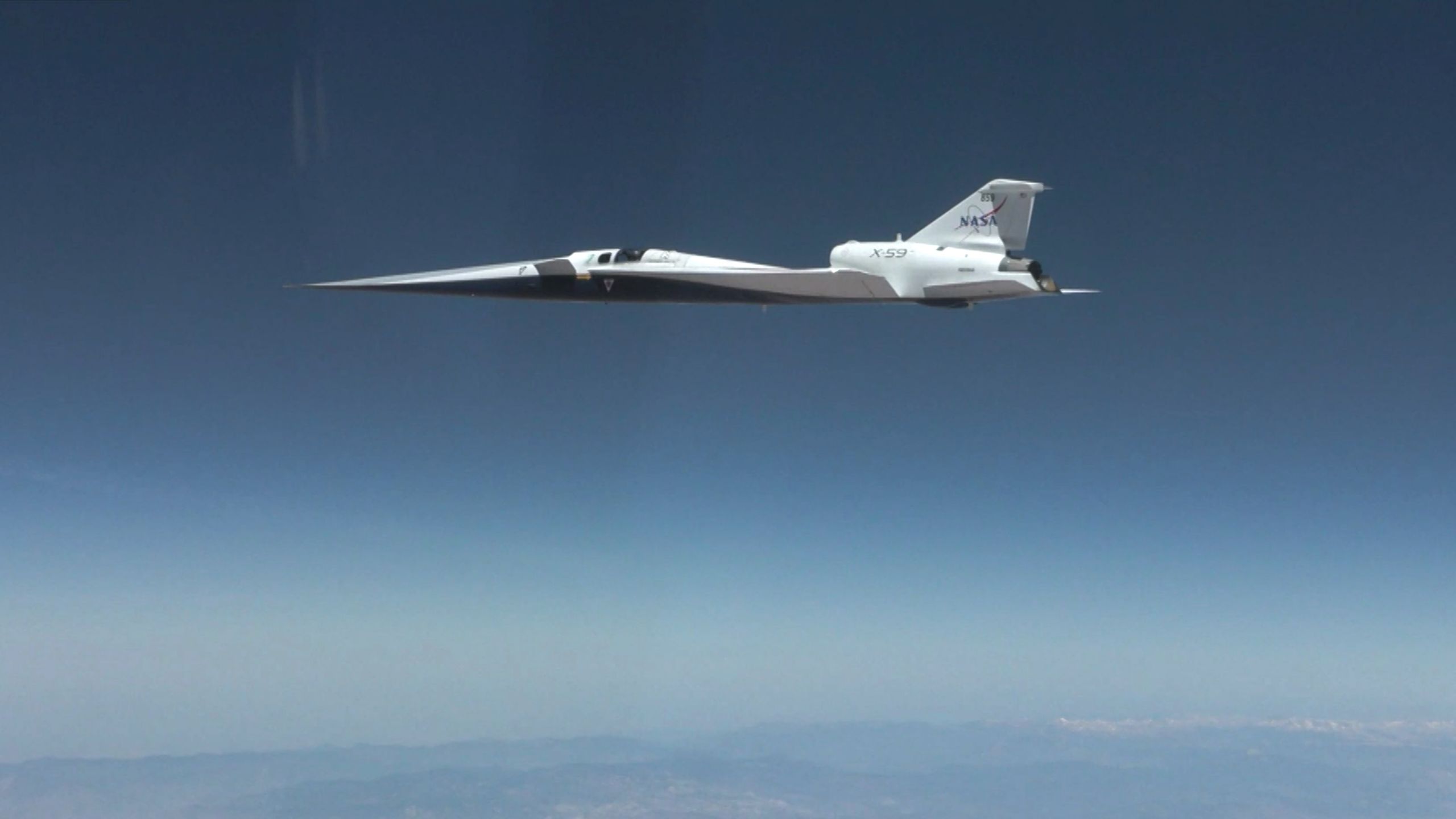
Summary: On Friday, June 5, 2026, NASA's X-59 quiet supersonic research aircraft exceeded the speed of sound for the first time. The Lockheed Martin Skunk Works-built demonstrator lifted off Edwards Air Force Base in California at 2:08 p.m. EDT (1808 GMT; 11:08 a.m. local time) with NASA test pilot Jim "Clue" Less at the controls and touched back down at the same runway 81 minutes later. NASA reported a maximum speed of 713 mph (1,147 kph) — about Mach 1.1, or roughly 10% above the local speed of sound — and a peak altitude of 43,400 feet (13,228 m). The achievement came more than six months after the aircraft's first flight on Oct. 28, 2025 and follows a patchy test campaign that included an aborted second flight in February and a ground abort on May 1.
Michael Kratsios, assistant to the president for science and technology and director of the U.S. Office of Science and Technology Policy, framed the milestone in geopolitical terms: "The X-59's first supersonic flight is a testament to America's enduring leadership in science, engineering and aerospace innovation." NASA Administrator Jared Isaacman struck a more operational note, noting that "since the aircraft's first flight on Oct. 28, 2025, the team has made tremendous progress, flying 16 times in the last 90 days and getting into a steady test rhythm."
The X-59 is the centerpiece of NASA's Quesst — "Quiet Supersonic Technology" — program. Its elongated nose, ejections-seat-forward visibility system, and carefully shaped airframe are all designed to replace the conventional "clap" sonic boom with a soft "thump" that NASA hopes regulators will accept over land. The aircraft will eventually fly over selected U.S. communities so researchers can record how residents perceive the thump, with microphones on the ground and underwater. "This speed and altitude are the base conditions for the X-59 when it will eventually fly over several U.S. communities," NASA officials wrote in the same statement, adding that the agency will share the resulting acoustic data with U.S. and international regulators to inform new noise-based standards for overland supersonic flight. Such flights have been banned by the Federal Aviation Administration since 1973.
The 713 mph / 43,400 ft envelope recorded on June 5 is not a stress test; it is the configuration NASA plans to use for the community-acoustics campaign. Whether the thump is quiet enough to win regulatory approval is the question the rest of the Quesst program is built around.
Sources (original pages):