
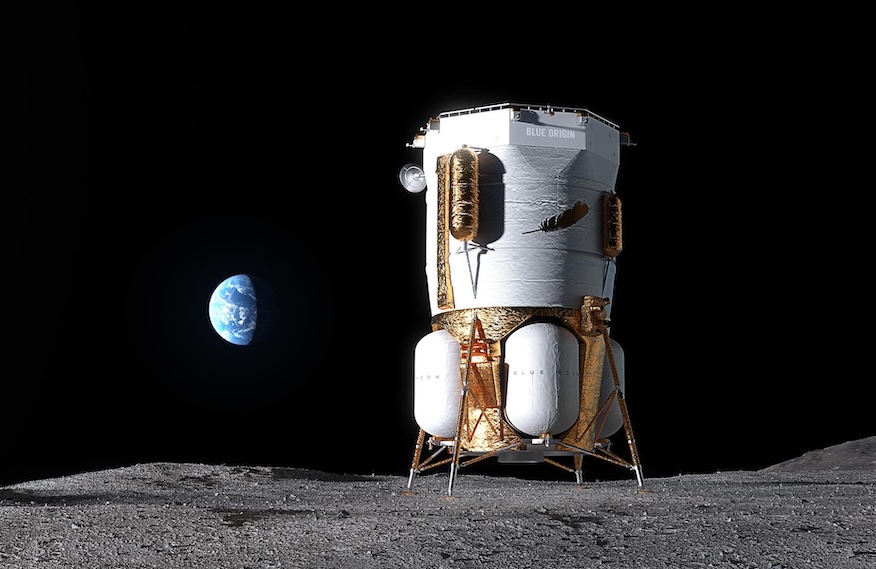
NASA Administrator Isaacman: Blue Moon landers to be decoupled from New Glenn, new launcher sought
Summary: One week after Blue Origin's New Glenn exploded during a static-fire test at LC-36, NASA Administrator Jared Isaacman said in a FOX Business interview on Thursday (June 4) that NASA wants to move the Blue Moon MK1 cargo lander — and potentially the MK2 crewed lander — onto a rocket other than New Glenn. Isaacman kept Artemis 3 on track for a 2027 test mission and a 2028 crewed lunar landing, framing the agency's posture as a "whole-of-government response" to the May 28 incident.
"Decoupling the lander from the launch vehicle and the pad"
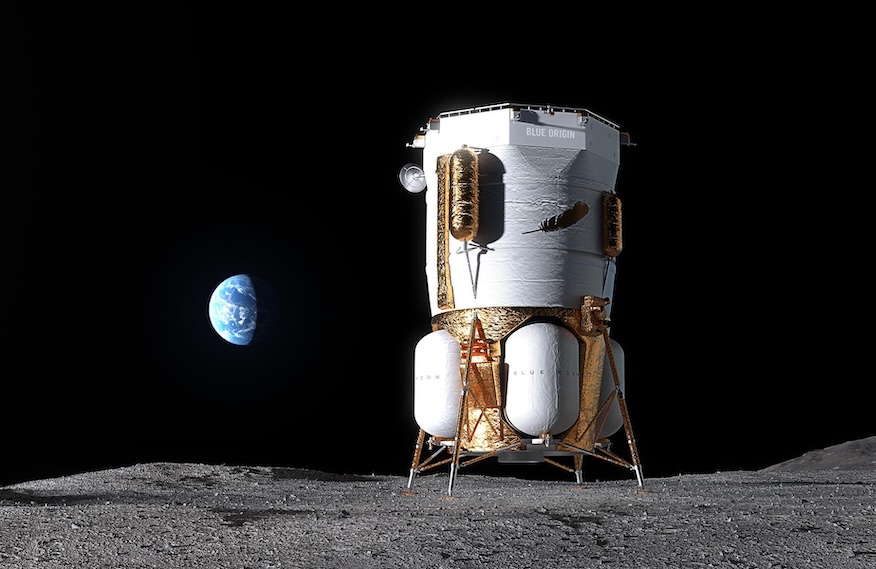
Isaacman's interview yielded three distinct signals. The first is structural. "We are also de-coupling the lander from the launch vehicle and the pad itself," he said. NASA is no longer treating Blue Moon's fate as a single point of failure on New Glenn and LC-36.
The second is schedule. "NASA is laser focused on the lander because we're laser focused on our mission to return astronauts to the surface of the moon before 2028, and we're gonna be able to keep that lander in development, progressing, so it's available for our test mission in 2027, which is Artemis 3, and potentially available to meet our landing objectives in 2028." In other words, the lander hardware must be ready for the 2027 test mission slot of Artemis 3, and ideally capable of supporting the 2028 landing — the schedule cushion is gone.
The third is posture. Isaacman framed the explosion as the cost of doing business in spaceflight. "It's a setback that happens in this business. It's incredibly complicated. A rocket is a controlled explosion," he said. The job, he added, is to learn from it and move forward.
MK1 cargo and MK2 crewed both in scope
A NASA spokesperson confirmed to Spaceflight Now that the agency would like to see launches of the Blue Moon Mark 1 cargo lander — and "potentially" the Blue Moon Mark 2 crewed lander — shift to a rocket that is not New Glenn. The "potentially" softens the language around MK2, but the direction is the same: NASA is preparing to decouple both landers if necessary.
The candidate rocket list has not been published, but the set of US rockets currently capable of sending a Blue Moon-class payload toward the Moon is short: ULA's Vulcan Centaur, SpaceX's Falcon Heavy, and in principle SpaceX's Starship further out. Within the Artemis program, SpaceX's Starship HLS and Blue Origin's Blue Moon HLS have always been the two crewed-lunar-landing options. NASA's first public move to formally separate Blue Moon from New Glenn introduces a new variable into that competition.
The site perspective
The May 28 anomaly is what Col. Brian Chatman, commander of Space Launch Delta 45 at Cape Canaveral Space Force Station, called "the largest explosion" seen at CCSFS. Chatman and Blue Origin officials confirmed the night of the blast that there were no injuries or fatalities.
The day after the explosion, Isaacman and several senior NASA engineers traveled to Florida to meet with Blue Origin engineers and survey the damage in person. On site, Isaacman pledged NASA's support to find the root cause and return New Glenn to flight "as soon as safely possible."

Blue Origin's own recovery timeline
Before Isaacman's interview, Blue Origin had already sketched out a recovery path. On June 1, Blue Origin CEO Dave Limp posted on social media that LC-36's propellant storage tanks were "all in good shape" and that the large support tower "can be repaired in place rather than torn down and replaced." He closed with: "We will fly again before the end of this year."
The contrast with NASA's June 4 statement is the heart of the story. Blue Origin emphasizes that New Glenn is recoverable; NASA is now openly exploring a path that does not depend on it. The two positions do not directly conflict, but they signal that NASA's risk tolerance for keeping Blue Moon on New Glenn has tightened further.
The background message
Isaacman also posted on X: "We have been saying for months at NASA that we are not going to sit on our hands and wait for the capabilities necessary to achieve the nation's most pressing objectives. We are going to take an active role alongside our partners, just as we did in the 1960s, to overcome setbacks, remove obstacles, and deliver the intended outcomes."
Comparing the present moment to Apollo-era "whole-of-government" mobilization is the standard rhetorical move after a major setback — a way to tell Congress, partners, and the public that the goal stands and the mechanism is being upgraded.
Bottom line
Isaacman's June 4 comments are the first formal NASA policy response to the LC-36 incident: keep developing Blue Moon MK1 and MK2 landers on schedule, but openly explore taking them off New Glenn. The short-term effect is to make the Artemis 3 timeline (2027 test, 2028 landing) more visible; the longer-term effect is to reshape the supplier map for America's "national team" cislunar lift.