
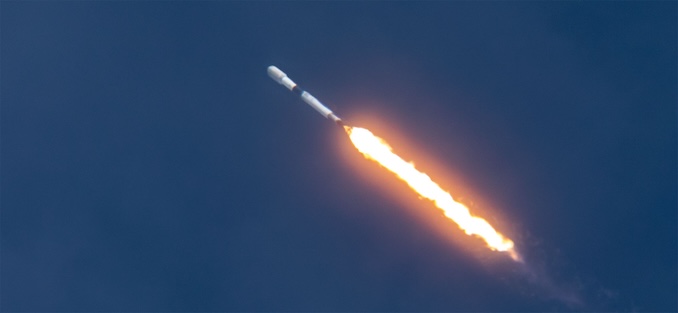
SpaceX launches 24 Starlink satellites from Vandenberg, sets 618th booster landing and 200th OCISLY touchdown
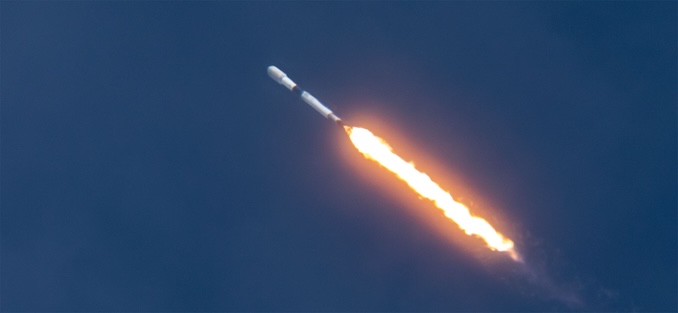
Summary: A SpaceX Falcon 9 lifted off from Space Launch Complex 4 East at Vandenberg Space Force Base at 11:40:39 a.m. EDT (15:40:39 UTC; 08:40:39 PDT) on June 3, 2026, sending 24 Starlink V2 Mini Optimized broadband satellites into low Earth orbit on the Starlink 17-47 mission. About eight minutes after liftoff, the first-stage booster B1088 — making its 16th flight — touched down on the drone ship Of Course I Still Love You (OCISLY) in the Pacific. The landing marked the 200th recovery on that vessel and SpaceX's 618th first-stage landing overall.
Mission and hardware
- Payload: 24 Starlink V2 Mini Optimized satellites
- First-stage booster: B1088, on its 16th flight — previous missions include NASA's SPHEREx, Transporter-12, and NRO-L126
- Recovery platform: Drone ship Of Course I Still Love You (OCISLY), positioned in the Pacific Ocean
- Launch site: Space Launch Complex 4 East (SLC-4E), Vandenberg Space Force Base, California
- Trajectory: South-southwesterly, inclined into low Earth orbit
- Liftoff: 11:40:39 a.m. EDT / 15:40:39 UTC / 08:40:39 PDT, June 3, 2026
- Deployment confirmation: SpaceX confirmed successful deployment of the 24 satellites at 11:50 a.m. EDT (15:50 UTC)
Two milestones in one touchdown
- OCISLY's 200th recovery. Of Course I Still Love You is the oldest of SpaceX's three operational drone ships, having first caught a Falcon 9 booster in February 2017. Through eight years of Pacific swells it has shouldered most of the West Coast return traffic; its sister ship Just Read the Instructions (JRTI) joined later, while the Atlantic-based A Shortfall of Gravitas (ASOG) handles the East Coast. Reaching 200 touchdowns is, in operational terms, the point at which the fleet's original workhorse has supported more Falcon 9 first-stage returns than any other vessel in the world.
- SpaceX's 618th first-stage landing. Per Spaceflight Now's running tally, the Vandenberg landing pushed SpaceX's cumulative first-stage recovery count to 618. That count covers every Falcon 9 first-stage return since the program's first successful drone-ship catch in 2015.
Mission context
The 24 satellites in Starlink 17-47 are V2 Mini Optimized spacecraft — the second-generation, smaller design that SpaceX has been mass-deploying since 2025. The launch keeps Starlink's on-orbit count above 10,000 satellites, by a wide margin the largest active broadband constellation in low Earth orbit.
The same calendar day offered a reminder of how weather shapes SpaceX's tempo: at Cape Canaveral's SLC-40, the Falcon 9 carrying Starlink 10-43 was scrubbed at 7:24 a.m. EDT (11:24 UTC) after the 45th Weather Squadron gave only a 30% chance of acceptable conditions, with a southbound cold front tripping the cumulus cloud, thick cloud, and surface electric field rules simultaneously. Starlink 10-43's next attempt was set for the early-morning window on June 4, leaving Vandenberg's Starlink 17-47 as the day's only completed Starlink mission on the two coasts.