
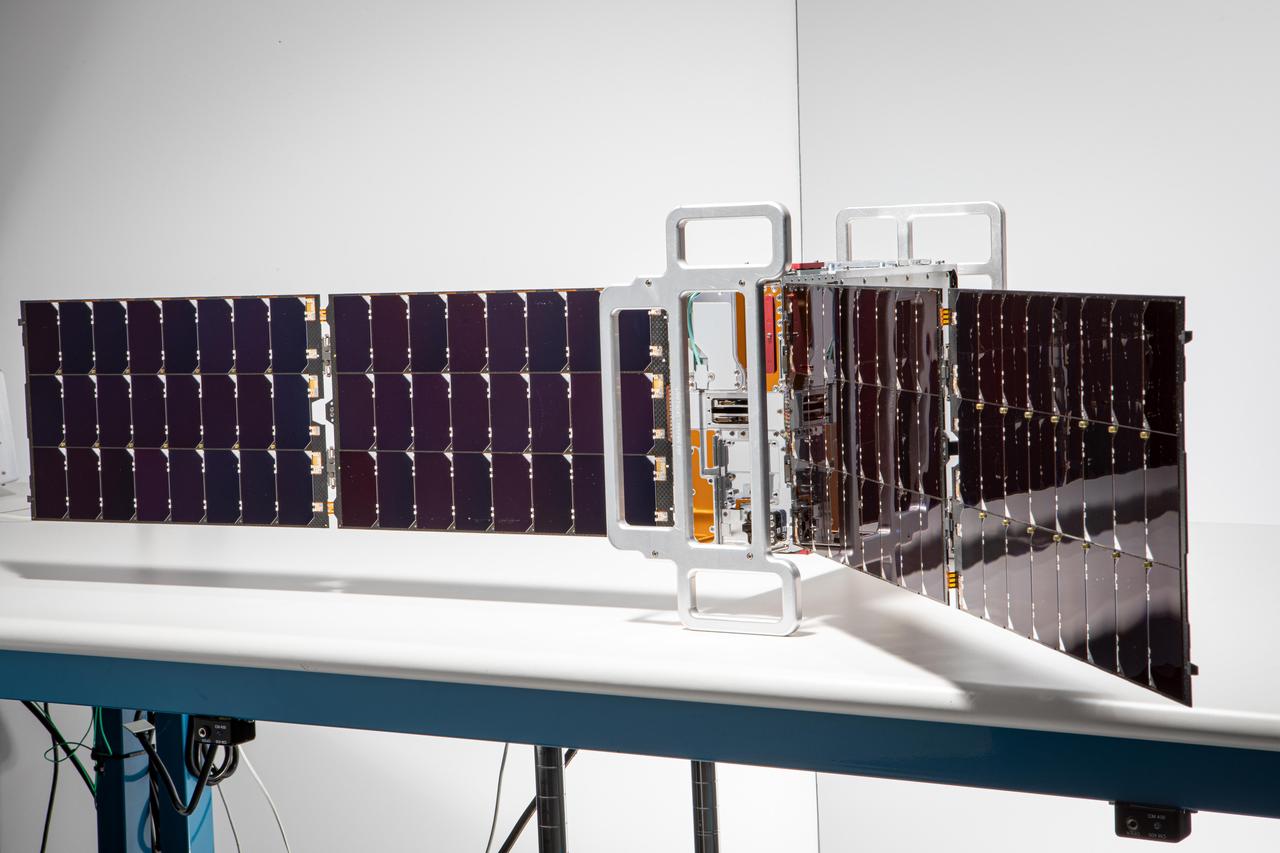
Beijing Yizhuang convenes space-computing symposium with BOE, Galaxy Space, LandSpace and others to operationalize its new space-computing innovation center
Summary: On June 3, 2026, the Beijing Economic-Technological Development Area (commonly known as Beijing Yizhuang, or Beijing E-Town) convened a closed-door space-computing industry symposium attended by BOE, Galaxy Space, LandSpace, Galactic Energy, Guanyu Xinsuan, CXMT and other space-computing supply-chain leaders. The session was billed as the next operational step for the Beijing Space Computing Innovation Center, days after Yizhuang formally registered the Beijing Space Intelligent Computing Research Institute and hours before Beijing unveiled a parallel — and academic-led — Space Computing Industry Innovation Center in Haidian. A-share commercial-space names reacted immediately: China Satellite (600118.SH) jumped more than 8 percent intraday on June 3, with Sunway Communication (300136.SZ), Shanghai Hanxun (300762.SZ), Dianke Lantian (688818.SH) and Western Materials (002149.SZ) following.
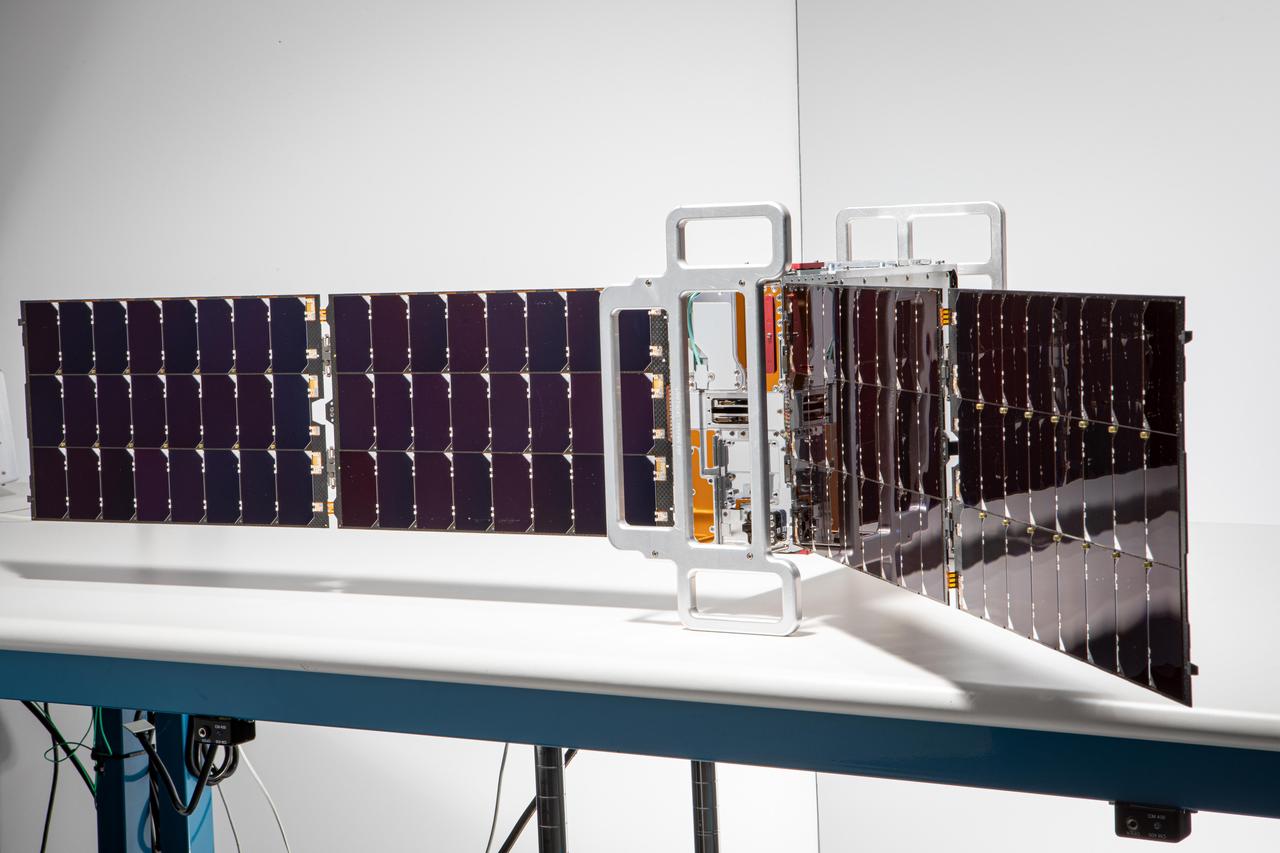
A symposium, a research institute, and an "innovation center"
The Yizhuang symposium sits inside a fast-tightening chain of three June announcements. On May 31, Xinhua's Economic Information Daily disclosed that the Beijing Space Intelligent Computing Research Institute had just been registered in Yizhuang, jointly set up by the National Xinchuang Park with BOE, Galaxy Space, LandSpace, Galactic Energy, Guanyu Xinsuan and CXMT. The institute targets five technology lines — radiation-hardened on-orbit compute chips, inter-satellite laser communications, space power and thermal management, integrated space-ground networking, and space-security standards — and is committed to building and launching a first demonstrator satellite before 2028.
At the June 3 symposium, executives from those founding companies told the Beijing E-Town government that the institute's incorporation "is a critical step that takes space-computing from blueprint to reality" and that they would commit engineering capacity in satellite manufacturing, compute chips, communication payloads, energy materials, scheduling software and precision components to attack the joint technical bottlenecks: radiation-tolerant AI chips, satellite-to-satellite laser links, and high-efficiency thermal control and power delivery.
Why now: the "compute goes to orbit" backdrop
"Space computing" is the new paradigm of putting data processing, storage and AI inference directly on satellites and space stations rather than beaming raw data back to ground. The concept stopped being theoretical in China on May 14, 2025, when a Long March 2D lifted twelve "Three-Body Computing Constellation" satellites from Jiuquan in a single launch: each satellite carries 744 TOPS of compute, the constellation aggregates 5 × 10¹⁶ operations per second and 30 TB of storage, and it is the world's first fully meshed on-orbit compute constellation. By the end of 2025, when LandSpace's Zhuque-3 made its orbital debut on December 3 (the first stage's recovery test failed by about 40 meters, but the second stage reached orbit), industry observers had already settled on a tri-axis framing: on-orbit compute + mega-constellations + reusable launchers = the three narrow gates of Chinese commercial space.
Beijing's two-headed play: Haidian writes the algorithms, Yizhuang builds the satellites
What makes the June 1–3 sequence worth reading carefully is the two-pronged, same-week announcement pattern. On June 1, Beijing's Haidian District — the academic heart of the city — stood up Beijing's first Space Computing Industry Innovation Center, led by Beijing University of Posts and Telecommunications (BUPT) together with industry partners and aimed at becoming a national-level facility. Two days later, on June 3, Yizhuang — the manufacturing and integrated-circuit heart of the city — held the symposium that links its newly incorporated research institute to the wider innovation center.
The shape this leaves is striking: Haidian produces the algorithms, Yizhuang produces the satellites. State-owned defense conglomerates (CASC, CASIC), top universities (BUPT, Tsinghua, the陆建华 Lu Jianhua academician group), and commercial-space unicorns (Galaxy Space, LandSpace, Galactic Energy) all end up sitting at the same table. That is precisely the "industry–academia–research" loop that the 2024 Beijing Action Plan for Accelerating Commercial Space Innovation (2024–2028) — the city's blueprint for a 100-billion-yuan commercial-space cluster — has flagged as the hardest piece to land.
How the market reacted
The market read the same lines: on June 3, China Satellite (600118.SH) closed up more than 8 percent intraday. Sunway Communication (300136.SZ, RF components for satellite payloads), Shanghai Hanxun (300762.SZ, military and satellite communications), Dianke Lantian (688818.SH, space-grade power) and Western Materials (002149.SZ, specialty metals for rocket structures) all followed. The implied bet is straightforward — space computing needs four buildable product lines (batch-built satellites, on-orbit compute networks, radiation-hardened chips, inter-satellite laser links) and each one is now a discrete, addressable market.
Near-term: the 2028 demonstrator. Long-term: an integrated space-ground AI fabric
The institute's hard milestone is a first demonstrator satellite before 2028 — the same year Beijing's 2024 Action Plan calls for the city to "be the first in the country to achieve reusable-rocket orbital recovery and reflight." The two deadlines are not coincidental: the city's strategy bets that reusable launchers + on-orbit compute + mega-constellations can be aligned onto a single 2027–2028 demonstration axis.
The medium-term ambition is a multi-satellite test network that achieves "trial operation of an integrated space-ground intelligent computing network" — conceptually similar to Elon Musk's repeated 2024–2026 framing of a Starlink-V3 + xAI alliance, but executed through a "central SOEs + national compute infrastructure + commercial satellites" model rather than a single vertically integrated firm.
Sources (original pages)
- Beijing E-Town holds space-computing symposium; commercial-space stocks rise — Pengpai / CLS (June 3, 2026) — 2026-06-03 13:54
- Beijing Space Intelligent Computing Research Institute established; a key step for the space-computing industry — Xinhua / Economic Information Daily — 2026-05-31
- Beijing releases commercial-space roadmap: reusable-rocket orbital recovery by 2028 — Xinhua / Sina Finance — 2024-01-26
- BUPT, Tsinghua and Galaxy Space team up on space computing — Tencent News — 2026-06-02
- One rocket, twelve satellites: space-computing constellation enters orbit — Guangming Daily — 2025-05-15