Tianwen-3 Mars Sample Return: Launch Planned for ~2028, Return with Samples by ~2031
Summary: On April 24, 2026, the China National Space Administration (CNSA) officially unveiled the Tianwen-3 mission plan at the opening ceremony of the 11th China Space Day: launch is targeted for around 2028, with return of Mars samples to Earth around 2031. CNSA also released the Tianwen-3 Mars Sample Return Mission International Cooperation Opportunity Announcement, offering 20 kg of payload mass on the spacecraft for international partners.
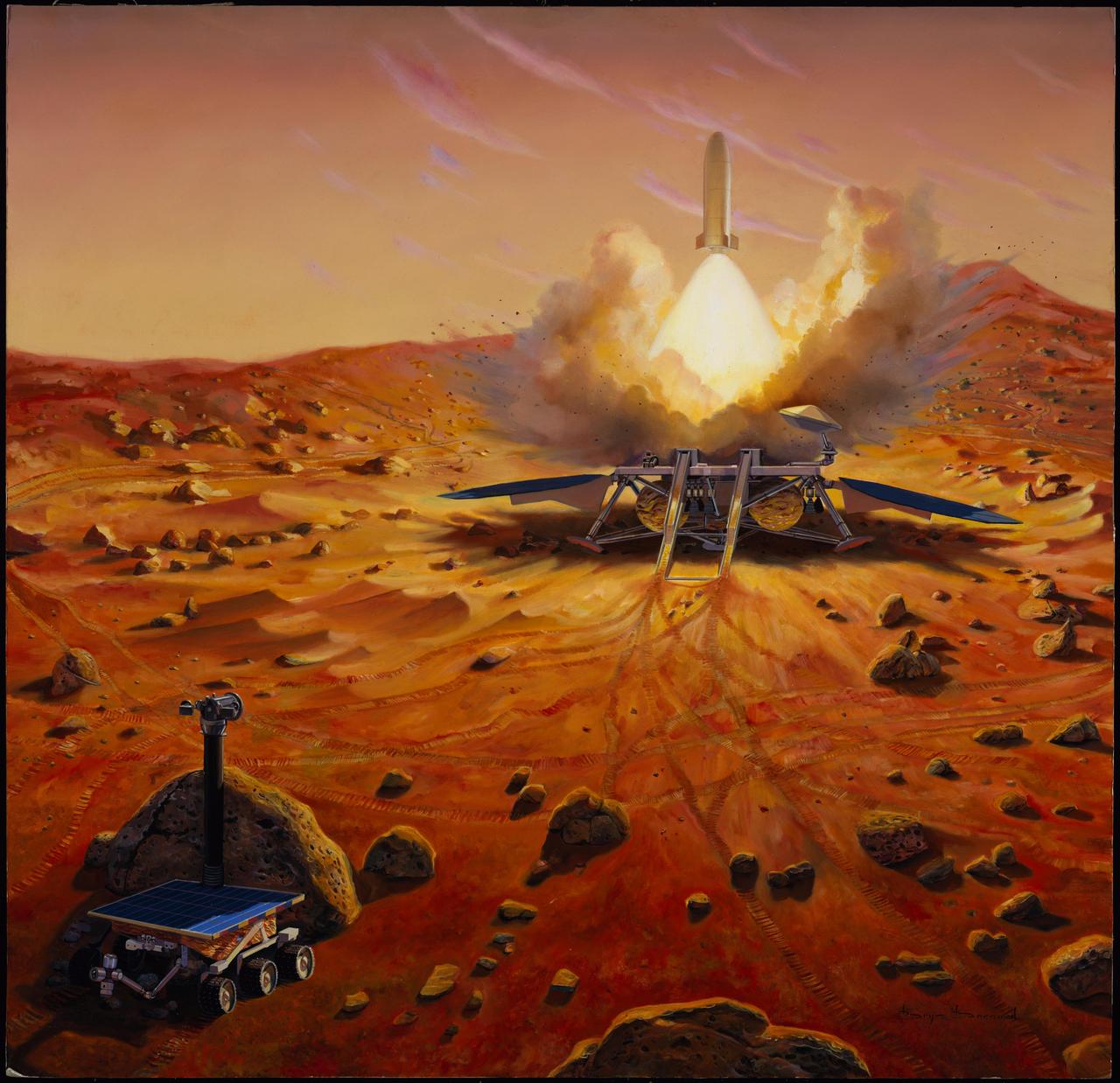
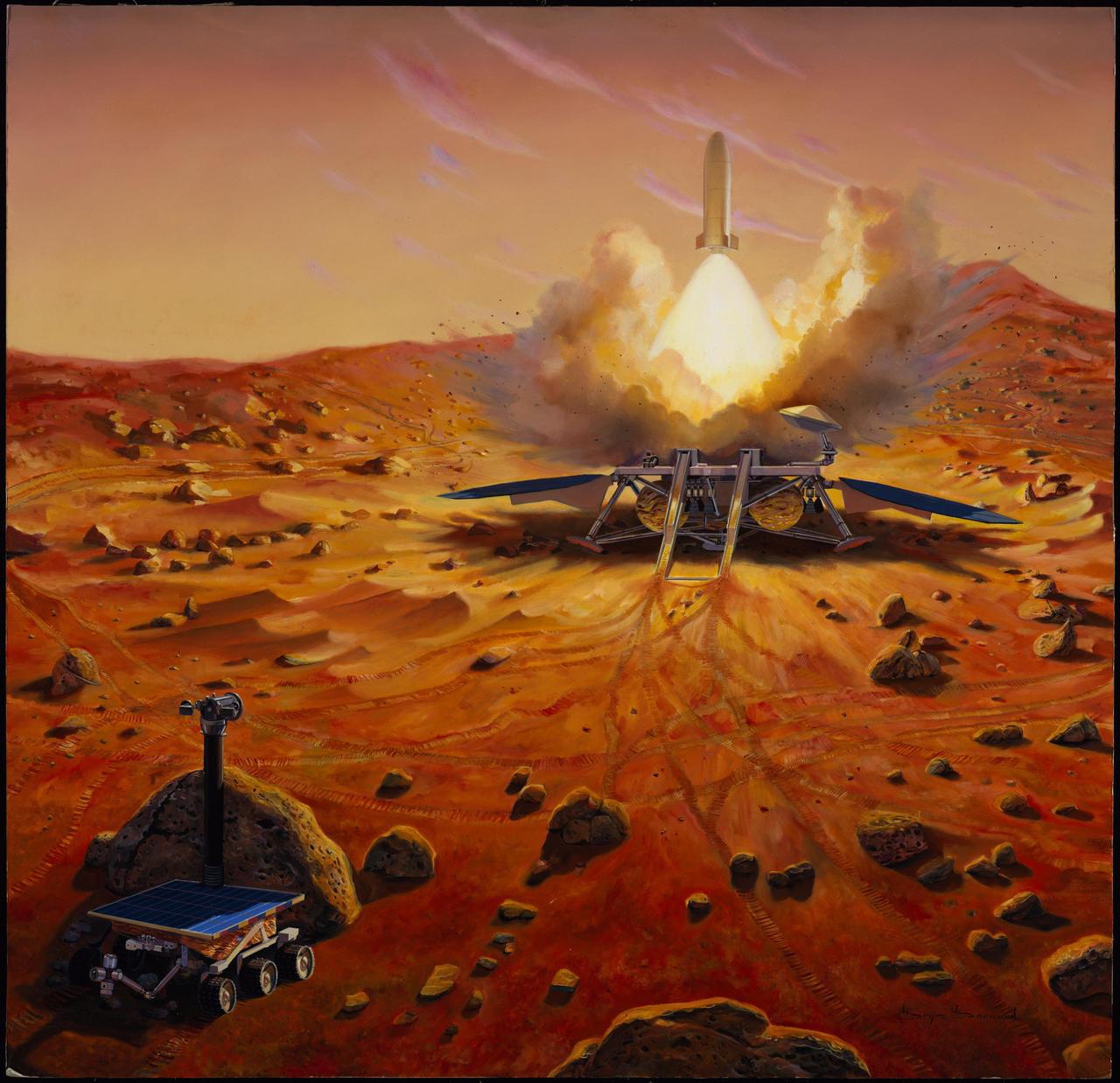 Credit: NASA / JPL-Caltech (illustrative image, for mission type only)
Tianwen-3 Mission Overview
Tianwen-3 is a core component of China's planetary exploration program, aiming to achieve the world's first Mars sample return. The spacecraft consists of a lander, ascender, orbiter/return vehicle combination, and a server/orbiter combination, carrying a total of 6 scientific payloads:
- Orbiter: ~350 km Mars orbit, sun-oriented attitude, design life ≥5 years; equipped with mid-infrared ultra-fine imaging spectrometer and Mars global multispectral camera
- Server: Highly elliptical Mars orbit (~400 km periapsis), surface monitoring for ~2 Martian years, design life ≥5 years; equipped with energetic neutral atom aurora spectrometer and high-precision vector magnetometer
- Lander: equipped with ultra-wideband detection radar and Raman-fluorescence spectrometer
Selected International Cooperation Payloads
Following the cooperation opportunity announcement issued in April 2025, CNSA received 28 letters of intent. Five projects were ultimately selected:
Orbiter Payloads (3):
- Mars PEX Spectrometer, led by the Committee on Space Research (COSPAR) Exploration Working Group, for Mars life-signature detection and mineral composition analysis
- Mars Molecular Ion Composition Analyzer, led by Macau University of Science and Technology, for Mars atmospheric escape process detection
- Laser Heterodyne Spectrometer, led by The Chinese University of Hong Kong, for Mars atmospheric water isotope profile and wind field detection
Server Payload (1):
- Mars Hyperspectral Imager, led by The University of Hong Kong, for life-signature, hydrated mineral, and resource surveys
Lander Payload (1):
- Laser Corner Reflector Array, led by Italy's National Institute for Nuclear Physics (INFN) — Frascata National Laboratory, for precise ground reference points on Mars
Open International Cooperation
CNSA is offering a total of 20 kg of payload mass on Tianwen-3 for international partners — no more than 15 kg on the orbiter and no more than 5 kg on the server.
Sources (original pages)
- Tianwen-3 mission planned to carry Mars samples back to Earth around 2031 (Xinhua News Agency)
- Tianwen-3 mission planned to carry Mars samples back to Earth around 2031 (TMT)
- Tianwen-3 mission planned to carry Mars samples back to Earth around 2031 (People's Daily client)
CNSA Lunar and Deep Space Exploration Center Director Guan Feng stated that Tianwen-3's primary objectives are Mars sample collection and return, with launch targeted for around 2028.