
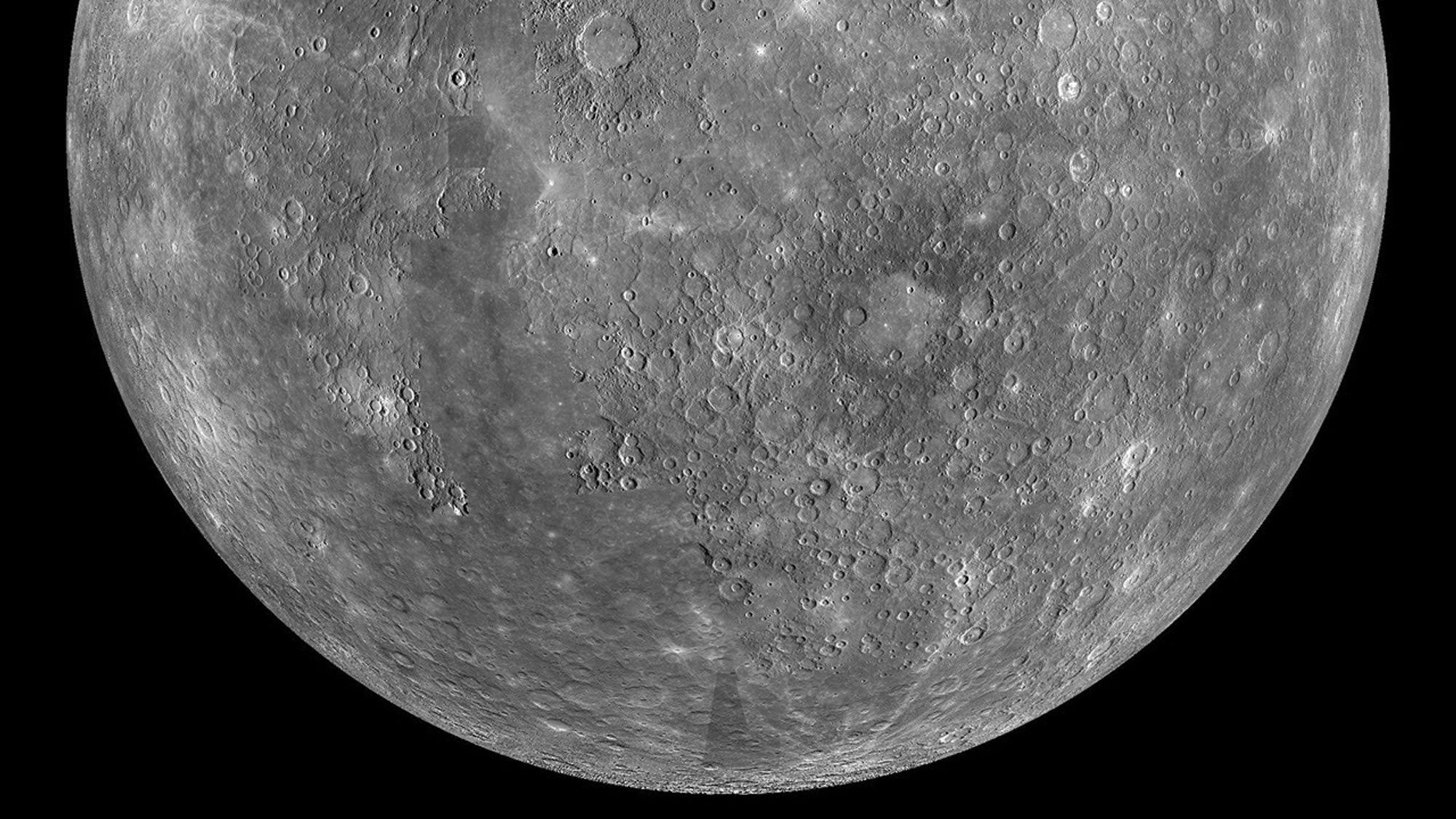
JWST Makes First Direct Observation of an Exoplanet's Surface: 'A Dark, Hot, Barren Rock'
Summary: May 4, 2026 — NASA announced that the James Webb Space Telescope (JWST) has directly observed the surface of exoplanet LHS 3844b for the first time. By analyzing the planet's thermal emission spectrum, researchers determined it has no atmosphere and is covered in dark volcanic basalt rock, marking a new era in exoplanet surface geology.
Observation Method: Photometry and Spectral Inversion
LHS 3844b is a super-Earth about 1.3 times Earth's radius and 2 times Earth's mass, with an orbital period of just 11 hours, located approximately 48 light-years away. Orbiting its host star at about 1/10 Mercury's distance from the Sun, its dayside reaches temperatures around 2,250 Kelvin (~1,977°C).
Traditional transit spectroscopy studies exoplanet atmospheres by analyzing starlight filtered through a planet's atmosphere during transit. However, LHS 3844b lacks an atmosphere, producing no meaningful transit signal. The research team employed an innovative approach: measuring thermal emission from the planet's dayside across different wavelengths to directly infer surface composition.
JWST's Mid-Infrared Instrument (MIRI) observed LHS 3844b continuously at wavelengths of 4-12 micrometers. By comparing the combined brightness of the planet and star, then subtracting the stellar contribution, researchers extracted the planet's thermal emission spectrum.
Key Finding: Basaltic Volcanic Rock Surface
The observations revealed that LHS 3844b's thermal emission spectrum matches closely with basalt (magmatic rock formed from volcanic eruptions), commonly found on lunar maria, asteroid Vesta, and other bodies in our solar system.
"What we see is a dark, super-heated world with absolutely no atmosphere," said lead author Sebastiano Marie. "Its surface is likely covered in basaltic lava or volcanic rock — somewhat similar to the lunar far side."
Researchers believe the planet's dayside may host large-scale volcanic activity or permanent lava lakes. Intense stellar radiation continuously melts and remelts surface materials, creating a unique geological landscape unlike anything in our solar system.
Scientific Significance: From Atmosphere to Surface
The significance of this finding lies in moving beyond atmospheric studies — which rely on transit spectroscopy — to direct surface observation. JWST's thermal emission method now enables direct surface analysis of airless rocky worlds.
"This is a turning point in exoplanet science," said NASA Exoplanet Science Program Scientist Natasha Sotong. "We're no longer limited to studying what's around a planet — we can now understand what the planet itself actually is."
LHS 3844b is classified as a "super-Earth" — a rocky planet with 1-2 times Earth's radius — one of the most common types of exoplanets discovered. This result provides crucial reference for understanding the surface characteristics and evolutionary history of this planet class.
Data Availability
Raw data is publicly available through the NASA Exoplanet Science Archive. The research paper has been published in the Astrophysical Journal Letters.