
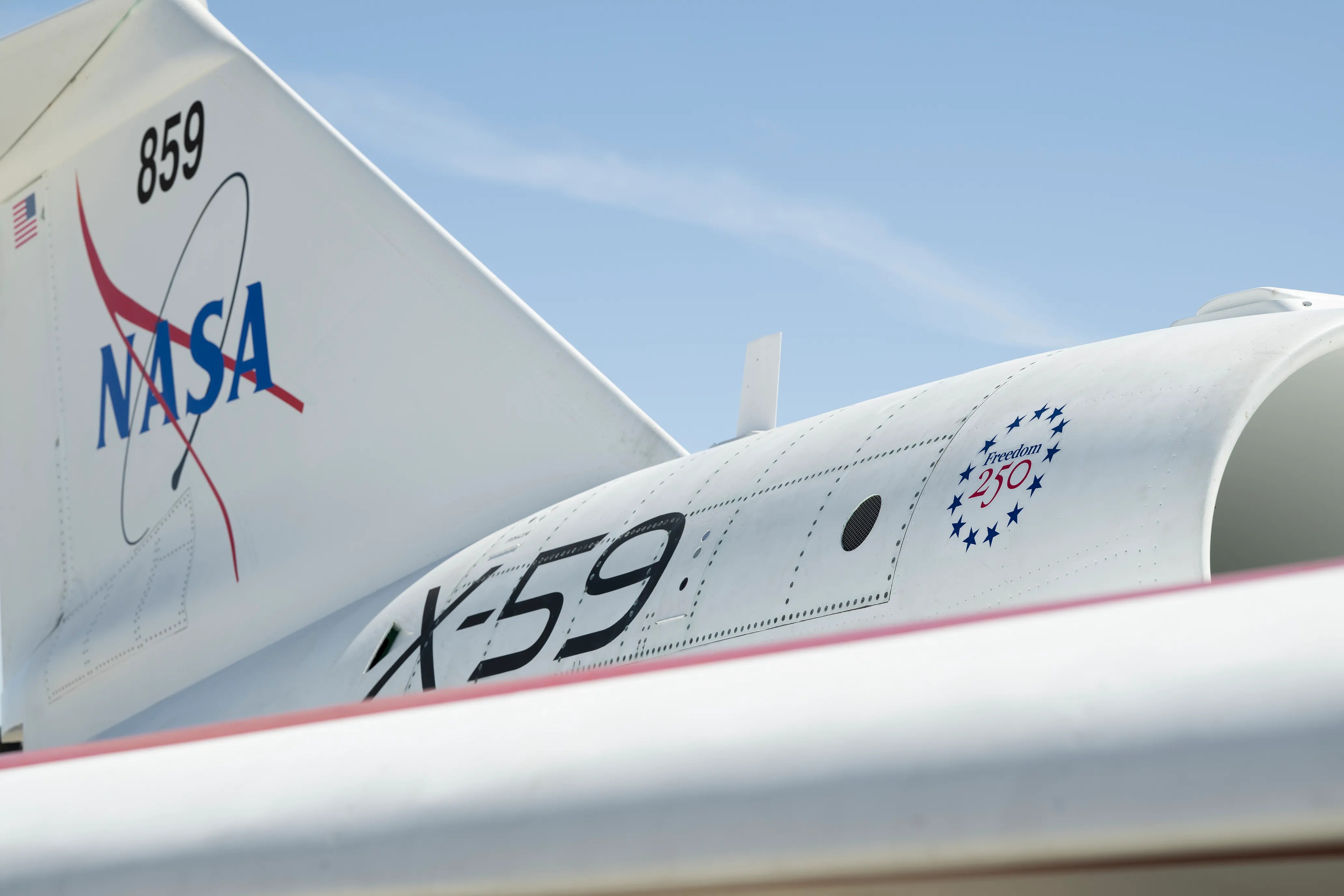
NASA's X-59 Supersonic Test Aircraft Unveils 'Freedom 250' Livery to Celebrate America's 250th Anniversary
Summary: On April 27, 2026, NASA announced that its X-59 quiet supersonic technology aircraft has received a special "Freedom 250" livery to celebrate America's 250th anniversary of independence (1776→2026). The new markings, displayed on the X-59's tail and jet engine housing, feature American flag elements and the commemorative "Freedom 250" designation. The X-59 is the centerpiece of NASA's Quesst project, aiming to reduce the sonic boom from commercial supersonic flight to a level acceptable to the public.
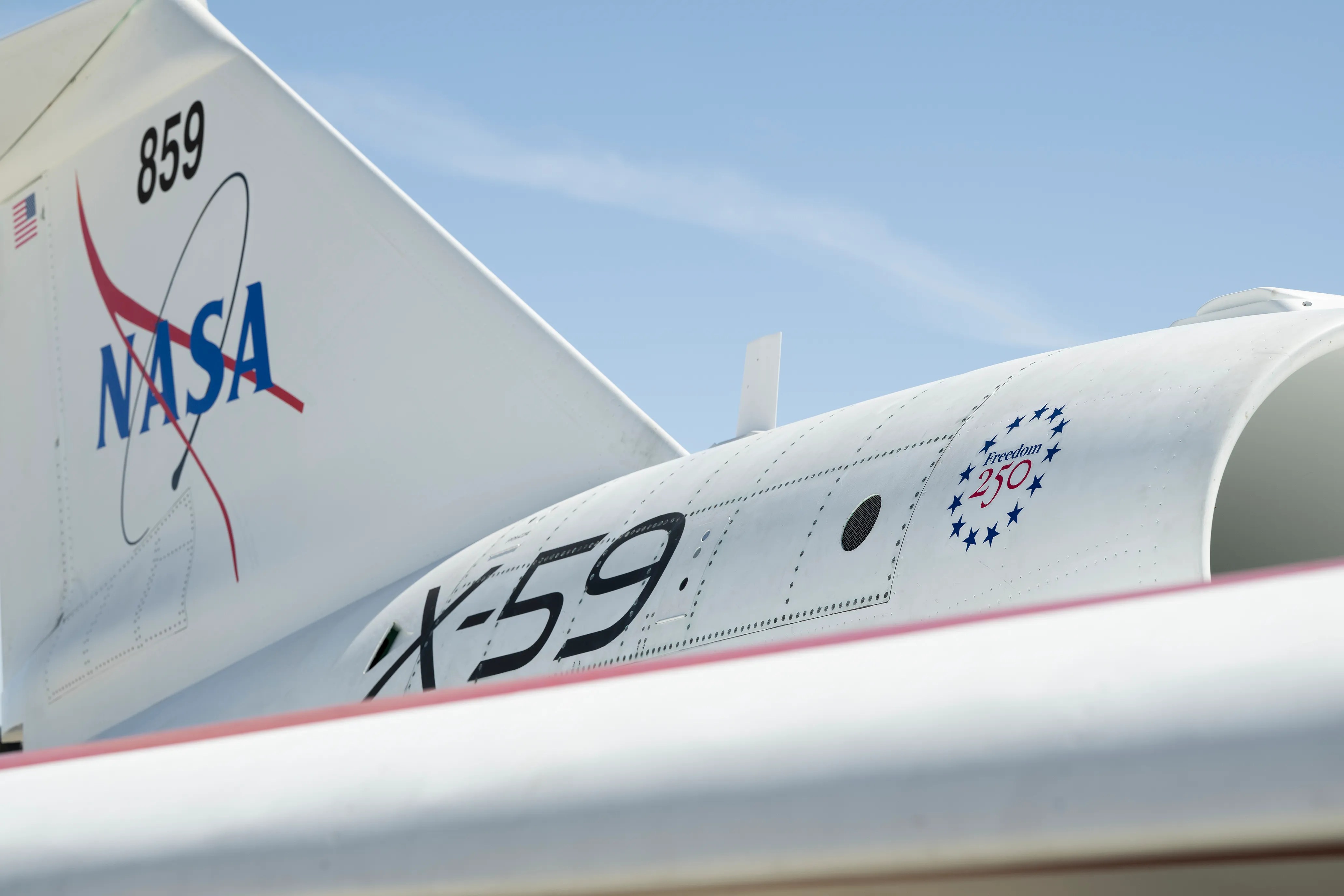 Credit: NASA / Carla Thomas
X-59: The Aircraft Set to Transform Supersonic Flight's Future
The X-59 is NASA's Quiet SuperSonic Technology (Quesst) aircraft, developed by Lockheed Martin's Skunk Works. The aircraft's core mission is to solve the "sonic boom" problem that plagued the Concorde supersonic airliner—which was banned from flying over land in several countries due to its thunderous sonic boom and eventually retired in 2003.
Through its unique design, including a pointed nose cone and specially shaped fuselage, the X-59 disperses the shock waves generated during supersonic flight into a much softer "sonic thump." People on the ground would hear something closer to a car door closing rather than the traditional earth-shaking boom of supersonic flight. NASA plans to conduct supersonic flight tests over several U.S. cities to gather public response data on this "quiet" form of supersonic travel.
The Freedom 250 Commemorative Livery
"Freedom 250" is a special commemorative designation created for America's 250th anniversary of independence in 2026. NASA chose to apply this special livery to the X-59, symbolizing America's spirit of continued leadership in aviation innovation. The new paint scheme features elements of the American flag and the words "Freedom 250," and was publicly revealed in April 2026.
The X-59 project lead stated: "We are honored to celebrate America's 250th anniversary of independence in this way. The X-59 represents America's pioneering spirit in aviation—as the nation's founders fought for freedom 250 years ago, we are innovating for a quieter aviation future."
Project Progress and Upcoming Flight Tests
The X-59 has already completed multiple ground tests and taxi tests, with its first flight scheduled for sometime in 2026. Once airborne, NASA will conduct a series of supersonic flight tests at approximately Mach 1.4 (1.4 times the speed of sound) at altitudes around 52,000 feet (16,000 meters). During the tests, NASA will deploy multiple noise monitoring stations along the flight path to collect sonic boom data on the ground.
Per NASA's plan, the X-59 flight test data will be submitted to the U.S. Federal Aviation Administration (FAA) and the International Civil Aviation Organization (ICAO) to advocate for updating regulations on supersonic flight over land. If all goes well, future "quiet supersonic" passenger aircraft could enter commercial service in the 2030s.