
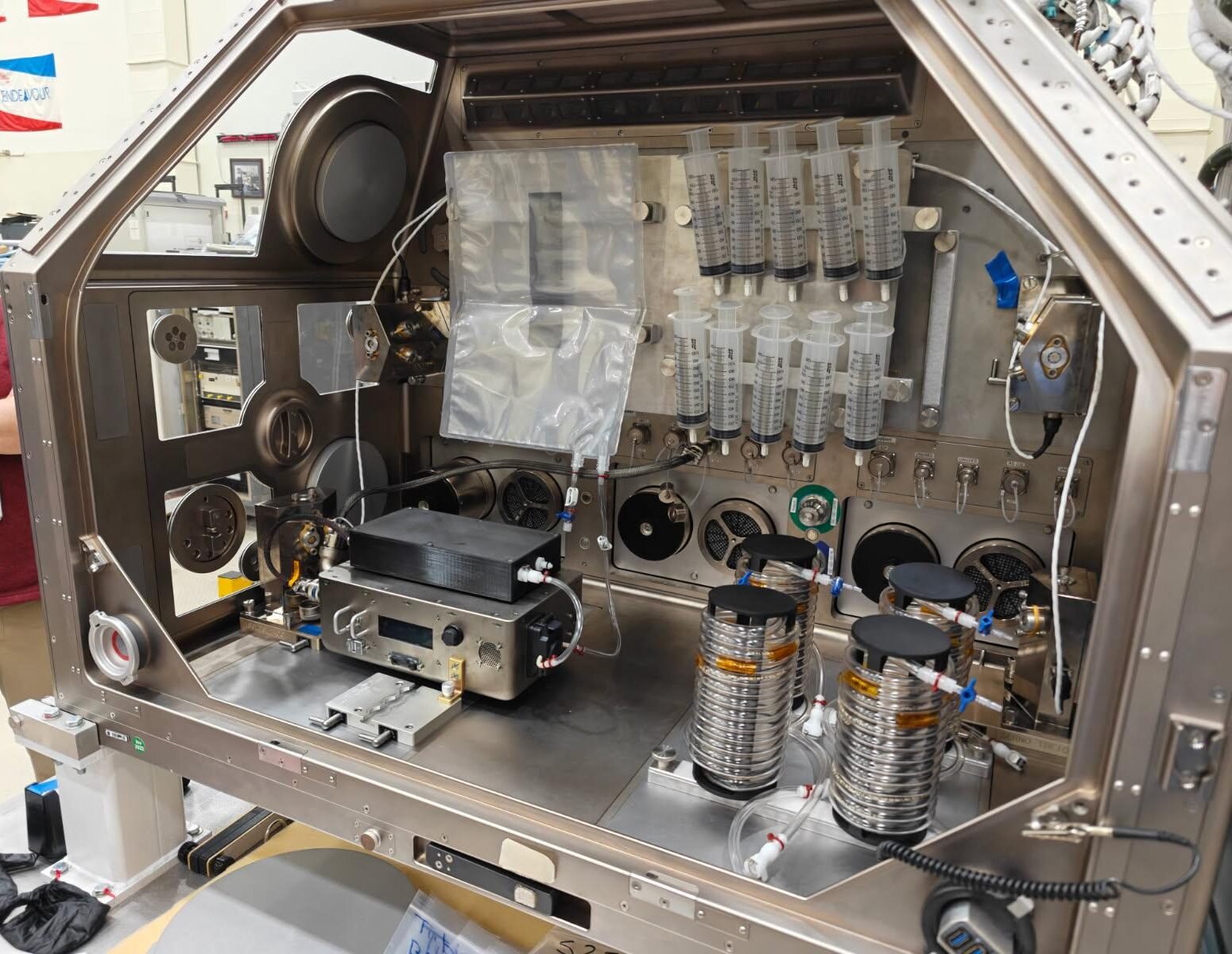
NASA Tests IVGEN Mini System to Produce IV Fluid Aboard ISS
Summary: NASA has successfully demonstrated the IVGEN Mini system aboard the International Space Station, a compact device capable of producing intravenous (IV) fluid on-demand from station drinking water. The technology addresses a critical challenge for long-duration deep space missions where pre-packed IV fluid—currently limited to a 16-month shelf life—would be impractical to stock for journeys lasting up to three years. The system can generate 1.2 liters of IV fluid per hour and represents a key step toward sustaining crew health on future Mars missions.
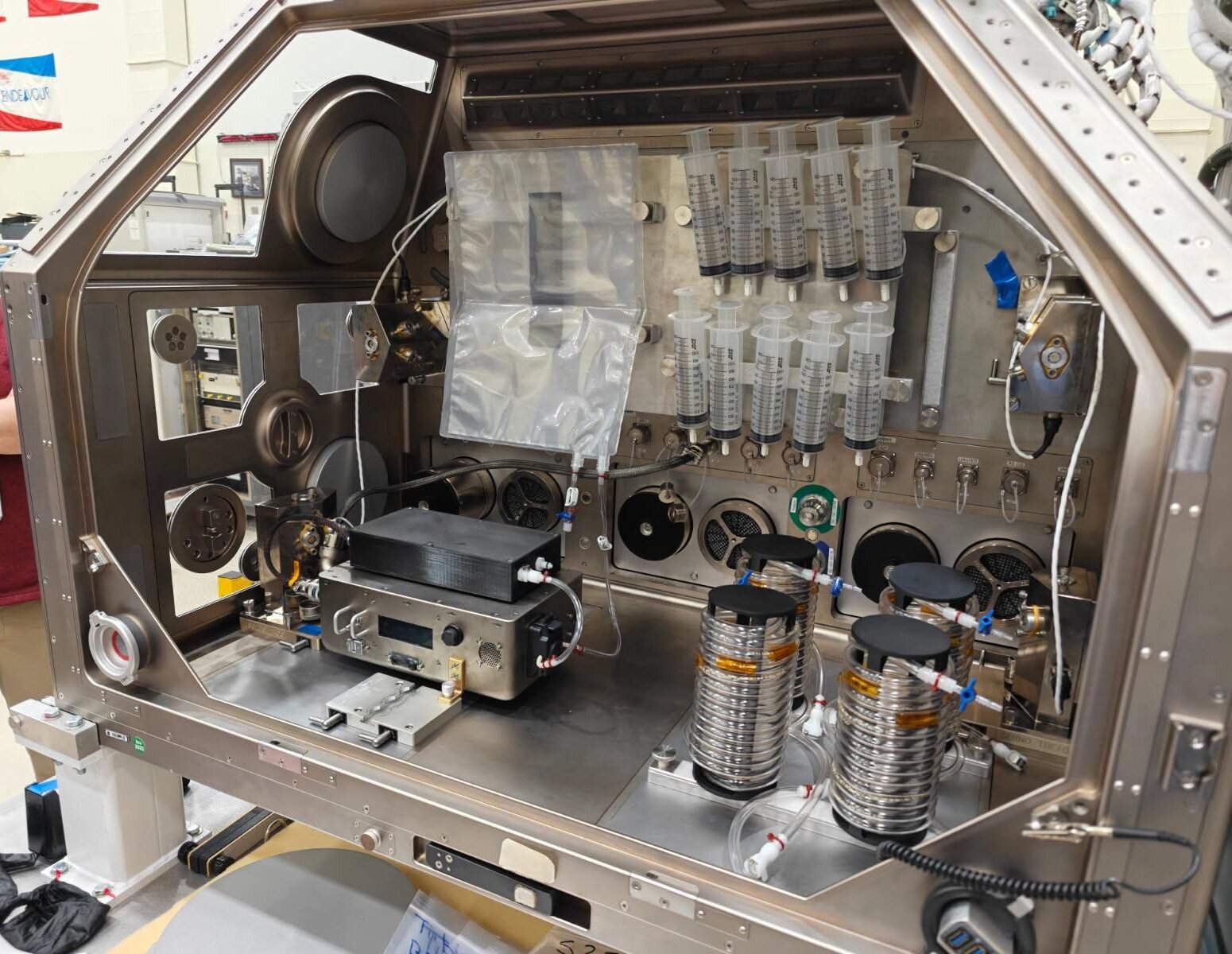 Credit: NASA
The IVGEN Mini system was operated aboard the ISS in April 2026, with astronauts producing 10 liters of IV fluid over two days of testing. The system works by connecting to the station's drinking water supply, which is then filtered through IVGEN Mini to remove particulates and mineral ions. The processed water flows into an output bag containing premeasured sodium chloride, creating a sterile IV solution ready for medical use.
Why IVGEN Mini Matters for Deep Space Exploration
Current crewed missions carry pre-packed IV fluid pouches as part of their medical supplies. While effective for low Earth orbit operations, this approach becomes impractical for missions beyond—the fluid's limited shelf life would render supplies useless on a three-year journey to Mars. IVGEN Mini eliminates this problem by allowing crews to produce fresh IV fluid as needed, reducing cargo weight and ensuring medical supplies remain viable throughout the mission.
"Following launch, we have tentative operations planned for May," said Courtney Schkurko, engineering project manager at NASA Glenn. "The crew aboard the International Space Station will operate IVGEN Mini over the course of two days, and 10 liters of fluid will be generated."
The current system can produce 1.2 liters of IV fluid per hour, meeting the requirements determined by analyzing potential medical events during deep space missions and how quickly fluid must be available.
A Compact Solution Evolved from Early Designs
IVGEN Mini is the second iteration of this technology. The original IVGEN was demonstrated aboard the space station in 2010 but was significantly larger due to additional sensing equipment needed to prove the system worked as intended.
"With IVGEN Mini, we've reduced the system's size and weight," Schkurko explained. "The previous system used gaseous nitrogen to pump fluid through the system. Now, we have pumps that are miniaturized, which allow us to optimize our designs and refine the filtering process."
The reduction in size and weight is particularly important for deep space missions where every kilogram of cargo must be carefully justified.
Enabling Missions to Mars and Beyond
IVGEN Mini is managed by NASA's Mars Campaign Office as part of a broader suite of technologies developed to enable human exploration of the Moon and Mars. The system addresses one of the many logistical challenges of sustaining human health on worlds beyond our own.
"On a mission to Mars, if you needed to fly 100 liters of IV fluid, those 100 one-liter bags will take up a large amount of space, while IVGEN Mini takes up much less," Schkurko said. "It's that trade between packing IV fluid bags that are likely to expire during the mission or taking a small device that can produce it on demand."
The IVGEN Mini team is currently planning shelf-life testing of IV fluid produced by the system as the next phase of technology maturation.