China's Qingzhou Test Spacecraft Completes Key Technology Verification in Orbit
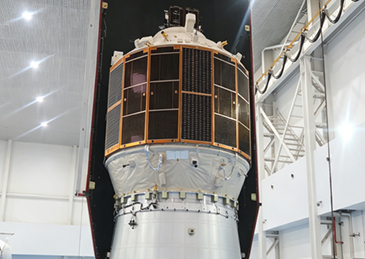
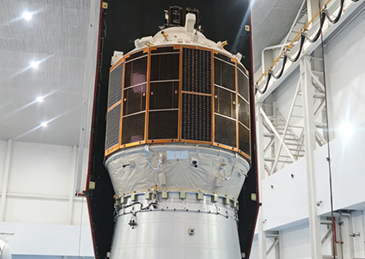
Summary: China's Qingzhou (Light Vessel) test spacecraft, independently developed by the CAS Microsatellite Innovation Research Institute, launched on March 30, 2026, and has completed initial flight control tests before being raised to a 600 km orbit. Weighing 4.2 tons with a 1-ton payload capacity, the spacecraft features a single-module design with a 3-year design life. It has completed orbital maneuvering from 200 km to 600 km, accumulated over 3,000 seconds of in-orbit engine burns, and achieved China's first space-based laser wire-fed metal 3D printing.
Mission Details
The Qingzhou test spacecraft launched on March 30, 2026, at 19:00 local time and has achieved the following milestones:
- Wide-range orbital maneuver: Raised from 200 km initial orbit to 600 km test orbit
- Long-duration steady-state burns: Single burns lasting hundreds of seconds, stable across all operating conditions
- Total in-orbit burn time: Exceeding 3,000 seconds cumulative
- Multi-domain experiments: Over 20 instruments covering space manufacturing, life sciences, and on-orbit servicing
Technical Highlights
First Space-Based Metal 3D Printing
In the field of advanced manufacturing, China achieved its first space-based laser wire-fed metal 3D printing, overcoming challenges in microgravity material handling and energy matching. This establishes an on-orbit manufacturing process database, supporting future space station repairs and in-situ space construction.
Design Innovation
The Qingzhou spacecraft uses an integrated single-module design with the following features:
- High space utilization: Single-module layout maximizes usable volume
- Multi-rocket compatibility: Flexible launch vehicle options
- Low-cost positioning: Targeting flexible resupply of the Chinese space station and commercial space operations
Strategic Significance
This test flight validated the reliability of core systems including overall design, structure, thermal control, attitude control, and propulsion. It lays the technical foundation for the development of the production-model Qingzhou cargo spacecraft. The project also opens new pathways for flexible space station resupply and commercial space operations in China, potentially becoming another major cargo capability alongside the Tianzhou spacecraft.
The spacecraft will continue operating in orbit, conducting additional scientific research and engineering experiments.